


Rhinoplasty with Nose Osteotomy
Who here has heard of the nose osteotomy technique? Many of you have probably come across this term before, but some may still be wondering how this technique can affect the final results after rhinoplasty—and what nose osteotomy actually is.
Today, WE Clinic is here to clear up all your questions by providing a comprehensive guide to the nose osteotomy technique—everything you should know before undergoing rhinoplasty. We will also share essential aftercare tips following nose osteotomy and many other important details you won’t want to miss.
What Is Rhinoplasty with Nose Osteotomy? This Article Has the Answers.

What Is Nose Osteotomy?
(Nose osteotomy) is a rhinoplasty technique that uses specialized surgical instruments to carefully fracture and reposition the nasal bones, allowing the nasal bridge to be narrowed and reshaped. This technique helps achieve an aesthetically pleasing nasal contour—such as a natural-looking nose or a gently sloped bridge with a refined, projected tip—without leaving visible scars on the face.
Nose osteotomy is suitable for individuals who have a wide nasal base, an asymmetrical nasal base, a prominent nasal hump, congenital nasal deformities, or nasal deformities caused by accidents. In addition, it can enhance the effectiveness of silicone rhinoplasty, help reduce the risk of post-surgical deviation, and improve overall aesthetic results.
For those who are just starting to learn about rhinoplasty, Dr. Sam has provided a detailed explanation here: Slope-tip rhinoplasty – How to prepare, how much it costs, and real rhinoplasty reviews.
For beginners who are starting to learn about rhinoplasty, the doctor has summarized the information in this article.
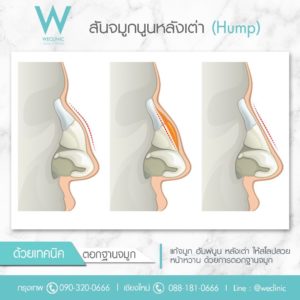
(Humpectomy) “
What does nose osteotomy help with?
Nose osteotomy, or osteotomy performed during rhinoplasty, is a specialized technique that helps improve the overall success of nose surgery and achieve the desired nasal shape. It works by correcting the original nasal base structure that may be crooked, tilted, or asymmetrical, bringing it back to a more balanced and straight position. This can be combined with silicone nasal implants to further refine and enhance the nasal shape. At the same time, nose osteotomy can also help reduce post-surgical issues such as a crooked nose after rhinoplasty or visible implant edges caused by implant shifting.
In addition, properly reshaping the nasal base can help design and control the width of the nasal bridge, allowing for a smoother, more natural curve that harmonizes with the eyebrows and nasal tip. After the procedure, the nasal bridge will appear smoother and less prominent or bulging, and it can also make the overall facial appearance look softer and more refined.

“Reduce a wide nasal bridge to a slimmer, more refined shape with the Nose Osteotomy technique.”
Who is Nose Osteotomy suitable for?
Nose osteotomy is suitable for individuals who
- Individuals with a nasal base that is too wide or larger than the distance between the inner corners of the eyes, causing the nose to appear flared.
- Individuals with a nasal hump (a prominent bony bump along the nasal bridge).
- Individuals with a crooked, deviated, or slanted nasal bridge.
- Individuals with a nasal hump or disproportionate nasal structure who want a higher or longer nose. In such cases, nose osteotomy may be required along with rhinoplasty. If silicone is placed without correcting the original nasal base structure, it may not sit properly against the nasal framework and could lead to issues such as silicone implant visibility or floating in the future.
How many types of nose osteotomy are there?
Nose osteotomy differs from other rhinoplasty techniques because it helps refine the nasal shape to achieve a more beautiful and natural-looking result based on the desired design, without leaving visible facial scars. There are three main nose osteotomy techniques, as follows:
- Open Rhinoplasty (Open Nose Reconstruction) This technique involves fully opening the nose to perform rhinoplasty and nose osteotomy, allowing the surgeon to clearly visualize the entire nasal structure. This makes the osteotomy easier and more precise. It is suitable for patients with significantly crooked or deviated nasal bridges, large nasal humps, or a very wide nasal base. After completing the osteotomy, the nose can be properly realigned before placing a silicone implant for optimal results.
- Closed Rhinoplasty (Closed Nose Reconstruction) This approach involves making incisions inside one or both nostrils and inserting surgical instruments through the same incisions used for rhinoplasty, resulting in no external scars. This method is suitable for patients with a wide nose or nasal base extending beyond the inner corners of the eyes, but without significant nasal axis deviation.
- External Lateral Nose Osteotomy This technique involves performing osteotomy from the outside on both sides of the nasal bridge. Specialized instruments are used to narrow and realign a wide or irregular nasal base, making both sides more symmetrical. However, this method leaves small external incisions of approximately 2–3 millimeters in size.
Nasal osteotomy is suitable for correcting the following nasal problems.
1. Hump nose
What is a hump nose?
A hump nose is a type of nose characterized by a prominent bump along the nasal bridge. It can be noticed when viewing the nose from the side or by feeling an uneven surface. In some cases, a pronounced hump can make the nose appear crooked or deviated and is often associated with a drooping nasal tip, which may make the face look older or harsher.
How is a hump nose corrected?
- If the hump is small and not very high, it can be corrected by filing the bone to make the nasal bridge smoother.
- If the hump is large, with very prominent bone and a very wide base, it is recommended to correct it by removing or cutting the hump bone (Humpectomy).
For patients with a nasal hump, the surgeon will use surgical instruments to remove or reshape the excess protruding bone and smooth the nasal bone base. This may be combined with silicone augmentation, which is carved to fit the new nasal structure, helping to increase height and conceal any unevenness of the nasal bridge.
Commonly used methods:
At We Clinic, doctors often choose to perform nasal base osteotomy with hump reduction together with open revision rhinoplasty (Open Nose Recon). This is because they want to clearly see any protruding or deviated nasal structure before precisely performing the bone osteotomy. After that, the bone base is smoothed. The protruding bone is permanently removed, so the nose will not become hump-shaped again.
Results:
It creates a smoother, more sloped nasal bridge. The bridge appears flatter and less protruded. The area between the eyes looks softer and more curved, making the face look sweeter and more gentle. It also helps correct nasal shape, reduces bone base deviation, and makes it more suitable for silicone placement, allowing the nasal bridge implant to fit more securely.
2. Wide nasal bone base — the sides of the nose have shape, but the front view lacks dimension.
Causes of a wide or bulky nasal bridge:
It is caused by large nasal bone structures on both sides of the nose. Try using your fingers to feel along the sides of the nasal bridge or beside the silicone implant. If you can feel that the nasal base in this area is wide, hard, and extends close to the inner corners of the eyes, it may need correction.
How can a large nose with a wide nasal base be corrected?
It can be corrected with nasal base narrowing (osteotomy). The doctor typically makes a tiny incision (about 2 mm) on the skin beside the nasal bridge, then inserts a small instrument to create controlled fractures in the overly wide nasal bone. After that, the nasal base is pressed inward to make the bone collapse slightly and become narrower and more refined.
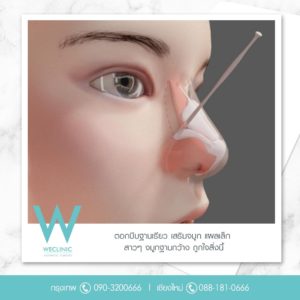
(Lateral Osteotomy)
Commonly used methods:
It can be performed with both closed rhinoplasty and open rhinoplasty techniques, as a small incision can be made on the skin at the side of the nasal bridge. In cases where it is performed together with Nose Reconstruction using hump reduction osteotomy, it can make the nose appear even slimmer (the more fracture lines created, the slimmer the nasal bridge becomes).
Results:
The nasal bridge will appear slimmer and more defined, rather than looking overly straight or bulky. The slope of the nasal bridge will also be adjusted to better match the overall facial proportions.
After nasal bone osteotomy surgery, during the first 3 months the bones may not have fully settled yet. In some cases, the doctor may recommend that patients gently use their fingers to help press and shape the nasal base to help the nose settle into shape faster.
Preparation Before Nose Osteotomy
Who is planning to undergo a nose osteotomy, or currently looking for information about it? One important thing you shouldn’t overlook is how to prepare before the procedure. Let’s take a look at how you should prepare before undergoing nose osteotomy.
- Research detailed information about nasal base osteotomy and consult a doctor about the nasal issues you want to correct and the results you expect.
- Consult a specialist doctor to evaluate your facial structure and nasal base to determine whether a nasal base osteotomy technique is appropriate to solve your concerns.
- Inform the doctor about any history of food allergies, drug allergies, and underlying medical conditions.
- Get adequate sleep and rest.
- Avoid vitamins, supplements, alcohol, and smoking for about 1 month before surgery.
- Avoid medications that affect blood clotting, such as aspirin, for about 1 month before surgery.
- Avoid drinking tea or coffee about 1 day before surgery.
- If possible, avoid foods that may cause inflammation, such as fermented foods, seafood, and other restricted foods.

Procedure of Nasal Base Osteotomy
For nasal base osteotomy using the open technique, the nose is opened to allow full visibility of the internal nasal structures. This makes performing the nasal base osteotomy during open rhinoplasty relatively easier. Therefore, this article will focus on the steps of the closed nasal base osteotomy technique, which is more complex and challenging because the surgeon cannot see the entire nasal structure. The closed nasal base osteotomy procedure can be divided into 7 steps as follows.
- The doctor will inject local anesthesia for the patient and wait until it takes effect.
- The doctor will make incisions inside both sides of the nose, then create a pocket under the cartilage lining in the lower nasal area.
- Next, the doctor will create a pocket under the upper bone lining in an appropriate size (depending on the shape and size of the nasal bone) and the elasticity of the nasal tissue.
- An instrument for nasal base osteotomy will be inserted, and the nasal base on both sides will be adjusted to achieve better symmetry.
- The doctor will compress or narrow the nasal bone base as appropriate for the facial structure. After that, the bone base will be refined to make it smooth and to create a smooth nasal bridge slope without a hump. After surgery, a nasal splint may be applied because bone movement can occur after osteotomy.
- The pre-shaped silicone implant will be inserted under the bone lining and adjusted until it fits properly.
- The incision will be sutured closed.
Where is the best place to get a nasal base osteotomy?
It’s not true that getting a nasal base osteotomy anywhere will always give great results. Choosing the right place for a nasal base osteotomy is just as important. If you want results that look outstanding, beautiful, and natural, you should choose carefully.
Today, WE Clinic would like to share some good tips on how to choose the right place for a nasal base osteotomy. Let’s take a look together.
- Choose a clinic or hospital that meets medical standards, is safe, and has a valid 11-digit medical license.
- Has complete equipment, proper medical instruments, and modern technology.
- The facility is clean, safe, and sterile.
- Rhinoplasty and nasal base osteotomy are performed by a specialist doctor with specific experience in this field. Importantly, you should be able to verify the doctor’s name through the Medical Council website.
- Provides honest consultation, advice, and nasal problem evaluation by a specialist doctor.
- Convenient location and easy to travel to.
- Has reviews from real patients, including written reviews and before-and-after photos of nasal base osteotomy procedures.
- The price is reasonable and not excessively cheap.
How much does a nasal base osteotomy cost?
| เสริมจมูก | ราคา |
| เสริมจมูกเทคนิคปิด + เนื้อเยื่อกระดูกเทียม | 𝟐𝟗,𝟗𝟎𝟎 บาท |
| เสริมจมูกจมูกกระดูกอ่อน เนื้อเยื่อหลังหู | 𝟑𝟓,𝟎𝟎𝟎 บาท |
| แก้เทคนิคปิดพิเศษ รองปลายกระดูกอ่อนหลังหู | 𝟰𝟵,𝟬𝟬𝟬 บาท |
| เสริมจมูกแบบโอเพ่น ปรับโครงสร้าง ยืดผนังกั้นจมูก | เริ่มต้น 𝟕𝟗,𝟎𝟎𝟎 บาท |
How much does rhinoplasty cost? How much does each technique cost? Why do rhinoplasty prices vary? Find the answers here: How Much Does Rhinoplasty Cost? Which Type of Nose Augmentation Should You Choose? Why Do Prices Differ?
How should you take care of yourself after the procedure?
Self-care after a nasal base osteotomy is not different from post-rhinoplasty care. It is similar to general nose augmentation aftercare.
Apply a cold compress during the first 72 hours after surgery. Focus on placing a cold gel pack on both sides of the nasal bridge. Apply it frequently, about once every hour for 5–10 minutes each time. This helps stop bleeding faster and reduces swelling.
After 72 hours, if there is slight bruising, it is considered normal. WE Clinic recommends using a warm compress on both sides of the nose in the same area.
For warm compresses, use the clinic’s blue gel pack. Soak it in warm water until it is comfortably warm. Before applying the gel pack, place a thin cloth between the skin and the gel pack to prevent excessive heat.
Caution! Do not let it become too hot, as it may cause a burn.
For those who are in the recovery period after rhinoplasty or nasal base osteotomy, let’s take a look at how you should take care of yourself.
- Avoid foods that may cause inflammation or increase swelling, such as seafood, fermented foods, and spicy foods.
- Avoid hard foods that require strong chewing, as this may cause the wound to reopen.
- Coconut water and gotu kola juice are recommended to help reduce swelling and bruising.
- Apply cold compresses during the early stage to help reduce swelling and bruising.
- During the first month, sleep on your back with your head elevated. Avoid sleeping on your side to reduce the risk of implant shifting.
- During the first 3 days, clean the wound frequently to reduce the risk of infection.
- Do not pick or scratch the wound. If itching occurs, apply an ointment instead to help relieve the itching.
- Avoid wearing glasses and exercising for 1 month after surgery.
- If you catch a cold and have a runny nose, take medication to reduce nasal discharge and avoid letting mucus contact the wound. If symptoms do not improve, consult a doctor.
- If a nasal splint is used, it can usually be removed by yourself after 7 days post-surgery (if advised by your doctor).
Food choices are very important for wound recovery after surgery. For recommendations on what you can eat after rhinoplasty, read more at: What Can You Eat After Rhinoplasty? A Complete Guide to Foods to Eat and Avoid After Nose Surgery.
Is Nose Osteotomy dangerous? What precautions should be taken?
At this point, many people may wonder whether rhinoplasty with nose osteotomy is dangerous, since the procedure involves controlled fracturing of the nasal bones to narrow the nasal base.
If the nose osteotomy is performed by an experienced and qualified surgeon, it is generally not dangerous. However, there may still be some surgical side effects, such as nasal bleeding and more swelling or bruising compared to standard rhinoplasty. This is because the procedure involves repositioning the nasal bones, which can create a temporary gap between the nasal bridge and the facial bones.
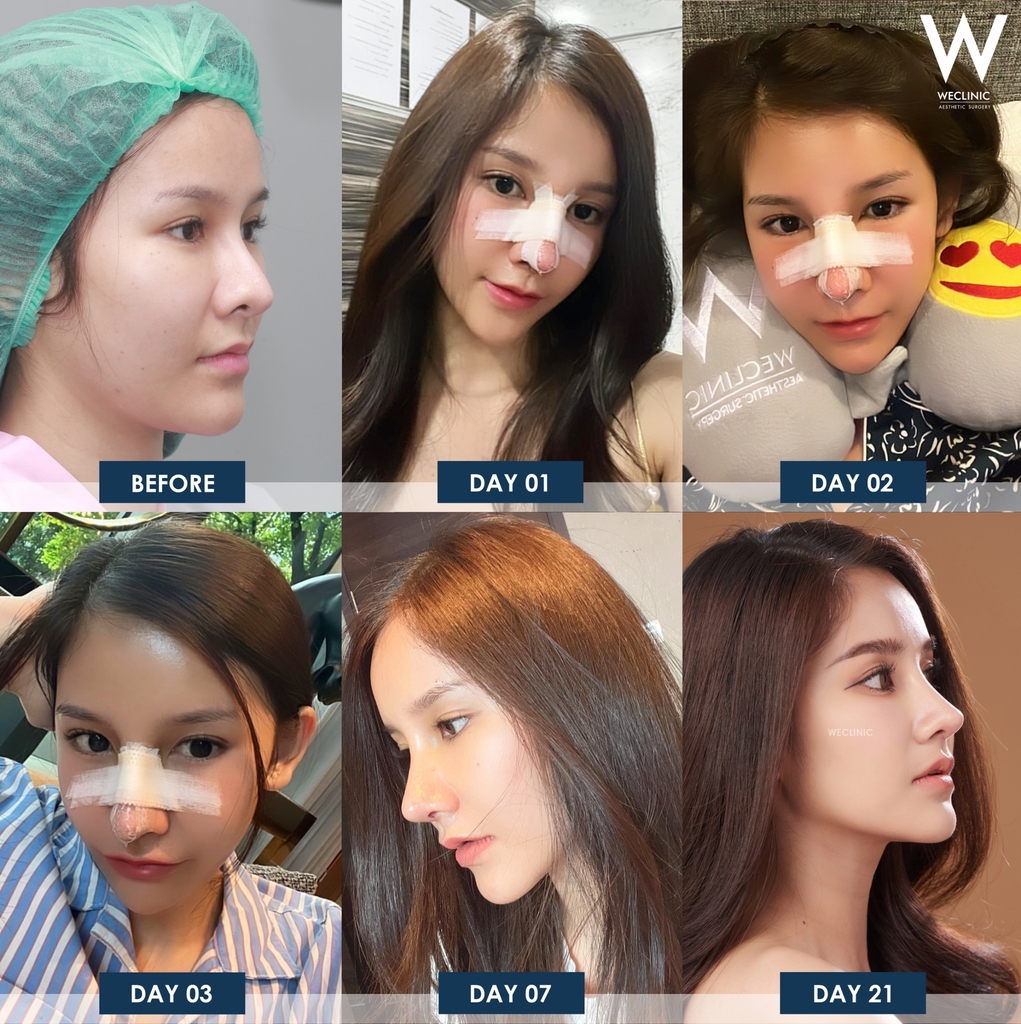
Therefore, during the first 7 days, a nasal splint must be worn to keep the nose in place. After about 6 months following the rhinoplasty, the facial bones and nasal bones will gradually fuse and stabilize together again.
Nose Osteotomy Review
For those who are considering rhinoplasty but have concerns about a wide, large, crooked, or deviated nasal base, you may be wondering whether nose osteotomy is necessary, how much slimmer the nose can look after the procedure, and whether it can truly correct structural nasal problems. You can review real cases of rhinoplasty combined with nose osteotomy from We Clinic to help support your decision-making before choosing the procedure.
Review nose surgery reviews performed by doctors at We Clinic here. : A collection of rhinoplasty reviews — beautiful results beyond expectations, well-balanced with facial features, and naturally looking.


Nose osteotomy without using a silicone implant.
If rhinoplasty is performed using the open technique, a nose osteotomy can be done without the need for a silicone implant. Instead, autologous grafts from other parts of the body, such as rib cartilage, can be used to enhance nasal height while simultaneously correcting the nasal structure through nose osteotomy, as an alternative to silicone augmentation.
Frequently Asked Questions About Nose Osteotomy
How many days does it take to recover from a nose osteotomy?
After a nose osteotomy, the nasal shape will typically settle into a more refined and natural contour within 1–3 months. However, if the osteotomy is performed using an open technique, it may take around 6–12 months to see the final, well-defined result.
During the first 3 months, gentle finger pressure may be applied to the nasal base (if advised by your surgeon) to help the nose settle into position more quickly.
Do you need to choose which type of nose osteotomy to undergo?
The answer is that you don’t need to know every detail.
In most cases, both Dr. Sam and Dr. Da will thoroughly evaluate each patient’s nasal structure before surgery. They will also explain the surgical techniques that may be required, such as how many osteotomy lines are needed, the direction of the osteotomy, the use of ear cartilage grafts, or whether an open rhinoplasty approach is necessary all tailored to each individual patient.
Therefore, the decision about which type of nose osteotomy to perform is typically made by the specialist surgeon.
How long do swelling and bruising last after surgery?
Swelling and bruising after a nose osteotomy are generally not much different from those experienced after standard rhinoplasty. To promote faster recovery, it is recommended to apply cold compresses along both sides of the nasal bridge, avoid inflammatory foods, refrain from smoking, and avoid alcohol consumption, as these measures can significantly help reduce swelling and bruising.
Does Nose Osteotomy Hurt?
During a nose osteotomy, patients do not feel pain during the procedure because local anesthesia is administered to minimize discomfort. As a result, the procedure is generally painless while it is being performed. However, once the anesthesia wears off, some soreness, swelling, and bruising may occur. These symptoms can be alleviated with cold compresses, which help reduce swelling and promote recovery.
Summary
Nose osteotomy is a highly effective rhinoplasty technique that can correct a wide range of nasal concerns, including a crooked or deviated nose, nasal tilt, a misaligned nasal axis, an uneven nasal bridge, a prominent nasal hump, and even nasal deformities caused by trauma or accidents.
Nose osteotomy is a highly effective rhinoplasty technique that can correct a wide range of nasal concerns, including a crooked or deviated nose, nasal tilt, a misaligned nasal axis, an uneven nasal bridge, a prominent nasal hump, and even nasal deformities caused by trauma or accidents.
Reference
- Cangello plastic surgery. (November 2, 2022.) Osteotomies in Rhinoplasty. cangelloplasticsurgery.com/face/rhinoplasty/osteotomies-in-rhinoplasty/


สำหรับผู้อ่านทุกท่านที่มีข้อสงสัยเพิ่มเติม ทีมแพทย์ We Clinic ยินดีให้คำปรึกษาฟรี
โดยไม่มีค่าใช้จ่าย หรือสามารถปรึกษาหมอทาง facebook หรือ Line ได้ที่นี่เลยครับ