



For individuals with a flared nose or wide nasal area, the nose may appear larger when smiling, which can often affect self-confidence. Many patients wish to address this concern permanently but may hesitate when deciding which treatment option is most effective. Ultimately, everyone desires a well-defined, gently sloped nose with a refined, projected tip that complements overall facial harmony.
Today, WE Clinic invites you to gain a deeper understanding of flared nose concerns—what a flared nose is, which nasal characteristics are considered flared, and the most effective treatment options available. We will also explore whether alar reduction alone is sufficient or if additional procedures may be required. Let’s discover the answers together.
What Is a Flared Nose?
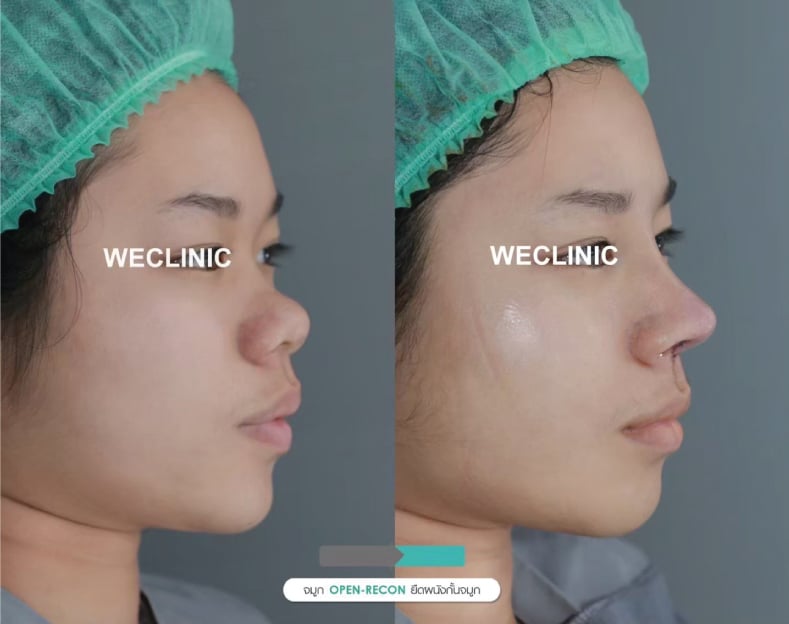
A flared nose is characterized by a wide nasal base and expanded nostrils, extending from the nasal tip to the alar region. It is often mistaken for a ‘pig nose’; however, the two are different. A pig nose typically appears short with an upturned, pointed tip, resembling a pig’s snout when viewed from the front, but it does not involve flaring of the nasal base or nostrils.
There are four main factors that contribute to a flared nose, including the following:
- Cartilage-related causes at the nasal tip: If the tip cartilages are large, wide, splayed, or irregularly shaped, this can affect the nasal tip contour, making it appear bulbous or flared. In such cases, evaluation and diagnosis by an experienced surgeon are required to determine the underlying cause.
- Skin-related causes: If the alar region on both sides can be easily lifted or pinched, this may indicate excessive or thick soft tissue. Some individuals also have increased fat accumulation in the alar area, causing the nose to appear round, soft, and flared.
- Muscle-related causes: If the nostrils elevate noticeably when smiling, this may suggest overactive muscles and excess fatty tissue, leading to nasal flaring during facial expression.
- Genetic factors
What Are the Characteristics of a Flared Nose?
For those who are unsure whether they fall into the category of having a flared nose, you can assess yourself by checking whether you meet the following three criteria.
- Flared nostrils: Observe whether the alar base extends beyond the inner corners of the eyes. Slight flaring may not be a concern; however, in more pronounced cases, the nose may appear disproportionately large compared to other facial features, potentially affecting self-confidence.
- Wide and prominent nostrils: Clearly visible, widened nostrils can make the nasal components appear enlarged and disproportionate.
- Large or bulbous nose: Often referred to as a “bulbous nose,” this appearance is caused by thick, rounded, and bulky nasal soft tissue.
Nasal Physiognomy: Is a Flared Nose Considered Auspicious?
For many people who undergo rhinoplasty to correct a flared nose, the decision is not only about aesthetics but also often related to facial physiognomy. According to various physiognomy beliefs, noses that are considered suitable for surgical correction include crooked or deviated noses, as these are believed to be associated with poor financial stability—money comes in but does not stay. In addition, having wide nostrils that are clearly visible from the front is often believed to indicate financial leakage and difficulty saving money.
Therefore, many people choose to improve the shape of their nose to better harmonize with their facial features, enhancing both self-confidence and perceived positive physiognomy at the same time. However, it is important to note that physiognomy is a matter of personal belief. Whether undergoing rhinoplasty for women or men, aesthetic balance and facial harmony should always be the primary consideration, while physiognomy remains a supplementary aspect.

How can a flared nose be corrected?
There are various ways to correct a flared nose, including both surgical and non-surgical options. The most suitable method depends on the patient’s concerns and the doctor’s evaluation. We have compiled the available treatment options for correcting a flared nose as follows:
- Nasal Tip Reshaping
It involves training and strengthening the muscles at the nasal tip. Some people may also combine this with massage techniques, believing that they can help gently reposition the cartilage and muscles around the nose and improve harmony with the facial structure. However, this method does not usually produce clearly visible results, so it may not be suitable for those who want immediate improvement in flared nose concerns.
- Nasal Wing (Alar) Botox Injections
Nasal wing Botox is a non-surgical procedure that involves injecting botulinum toxin into both sides of the nasal wings (alar area). The injections target the dilator naris or alar nasalis muscles, which are responsible for flaring the nostrils when speaking, smiling, or laughing. By relaxing these muscles, the nostrils are less able to contract and flare outward.
This technique is suitable for individuals whose noses flare when talking or smiling and who do not have severe nasal flaring. It is commonly combined with nasal bridge–slimming Botox to help reduce wrinkles and creases along the nasal bridge, make the nostrils appear smaller, and enhance a sharper, more defined nasal bridge.
- Nose Thread Lifting for Alar (Nasal Wing) Reduction
It involves using dissolvable threads to tighten and narrow the flared or wide nasal wings, helping them look more refined and enhancing the definition of the nasal bridge without undergoing surgical rhinoplasty. This method is suitable for those who are concerned about post-surgery recovery and therefore hesitate to choose surgical correction.
However, it may not be very effective for individuals with thick nasal tissue, severely flared nostrils, a flat nose, lack of nasal base support, or structural issues that cause the nose to widen. In such cases, for those who want a higher, slimmer, and more defined nose shape, rhinoplasty is generally recommended as it provides more noticeable and effective results.
- Alar base reduction (nostril reduction surgery)
It is considered one of the most popular methods for correcting a flared nose, as it is a type of permanent surgical procedure that can create a more aesthetically pleasing shape of both the alar base and the nostrils. However, it may carry risks such as scarring and postoperative swelling. In addition, alar base reduction is not suitable for everyone—especially for those who plan to undergo rhinoplasty revision or have existing nasal issues such as implant extrusion, nasal deviation, or asymmetry that may require future correction. In such cases, it is recommended to complete rhinoplasty first and evaluate the nasal shape before deciding whether alar base reduction is necessary.
- Rhinoplasty
Open rhinoplasty, in particular, involves comprehensive structural correction by accessing the internal nasal framework to address all underlying issues. This approach may be combined with additional procedures such as nasal base osteotomy and interdomal suturing, allowing the nose to become slimmer, more projected, elongated, and well-defined. As a result, this method provides a targeted and effective solution, and in many cases, alar reduction may not be necessary if the nasal shape becomes refined and well-balanced after 3–6 months of healing.

Flared Nose: Summary of Effective Treatment Options
In summary, when considering how to effectively correct a flared nose, it is highly recommended to consult with a qualified surgeon at a reputable clinic to determine the most appropriate treatment approach for each individual concern. In many cases, choosing an unsuitable technique—such as undergoing alar reduction before rhinoplasty—may lead to suboptimal results. This can require revision surgery or additional nasal augmentation, which may be more complex and technically challenging.
Therefore, if you prefer non-surgical options, thread lifting or botulinum toxin injections may be suitable alternatives. However, for those seeking long-term correction, open rhinoplasty offers a more definitive and targeted solution. If you would like to learn more about open rhinoplasty—how effectively it can address a flared nose, whether alar reduction is necessary, and how long it takes for the nose to fully settle—you are welcome to schedule a free consultation with the medical team at WE Clinic. Our surgeons will assess your condition and recommend the most appropriate treatment plan. For appointments or inquiries, please contact us via Facebook or LINE.



สำหรับผู้อ่านทุกท่านที่มีข้อสงสัยเพิ่มเติม ทีมแพทย์ We Clinic ยินดีให้คำปรึกษาฟรี
โดยไม่มีค่าใช้จ่าย หรือสามารถปรึกษาหมอทาง facebook หรือ Line ได้ที่นี่เลยครับ