

After rhinoplasty, many patients wonder whether it is safe to eat durian, especially during the recovery period when choosing the right foods is an important part of the healing process.
In this article, we’ll explain whether you should avoid durian after nose surgery, how long you should wait before eating it again, and which foods are recommended to support a smooth recovery.
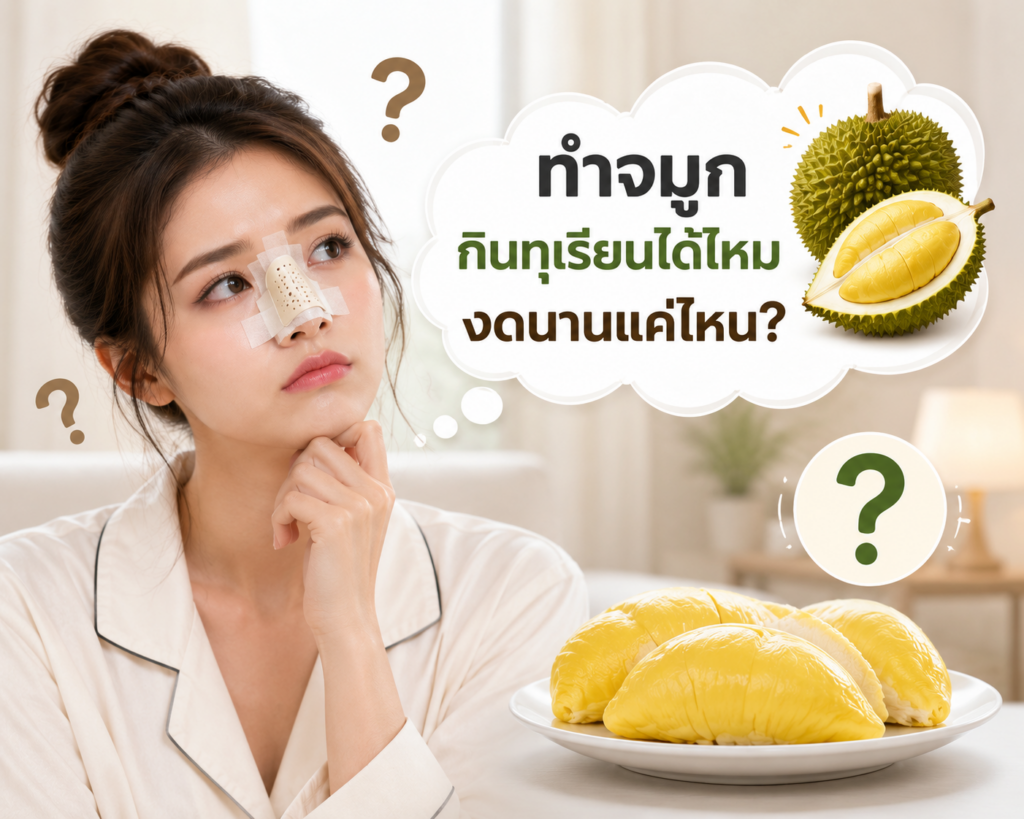
Can I Eat Durian After Rhinoplasty?
It is generally recommended to avoid eating durian for the first month after rhinoplasty. Durian is high in sugar and fat and is traditionally believed to generate body heat, which may interfere with the body’s natural healing process. As a result, the surgical wound may take longer to heal or become more prone to irritation.
If you’re considering rhinoplasty or would like to learn more before making a decision, read our comprehensive guide: Rhinoplasty Explained: Types of Nose Surgery, What to Expect, and Everything You Should Know Before Surgery (2026).
Why Should I Avoid Durian After Rhinoplasty?
The first month after rhinoplasty is a critical stage of recovery, during which the body repairs damaged tissues and reduces inflammation. Choosing a well-balanced, nutritious diet can help support the body’s natural wound-healing process.
Durian is relatively high in sugar and calories. Although there is currently no medical evidence confirming that durian directly delays wound healing or increases postoperative swelling, consuming large amounts during the recovery period may not be ideal.
This is especially true during the first week after surgery, when the tissues are still in the early stages of healing. For this reason, surgeons commonly recommend avoiding durian temporarily and choosing nutrient-rich foods that better support the recovery process.

How Can Durian Affect Surgical Wound Healing?
Durian contains several nutritional components that may influence dietary choices during the recovery period after surgery.
- High in sugar: Durian contains approximately 15–20 grams of sugar per 100 grams, depending on the variety and ripeness of the fruit. While there is no evidence that eating durian directly delays wound healing, excessive sugar intake may make it more difficult to maintain healthy blood glucose levels, particularly in individuals with diabetes or poor glycemic control. Maintaining stable blood sugar levels is generally considered beneficial for normal wound healing.
- High in calories and fat: Durian contains relatively high amounts of monounsaturated fatty acids (MUFAs) and polyunsaturated fatty acids (PUFAs). Although these are naturally occurring healthy fats, durian is also an energy-dense fruit. Consuming large amounts during the recovery period may not be ideal, as the body requires balanced nutrition to support tissue repair. For this reason, many surgeons recommend limiting or temporarily avoiding durian until the surgical wound has healed.
- May cause a sensation of body heat: Due to its high carbohydrate, sugar, and fat content, some people report feeling warmer, thirstier, or sweating more than usual after eating large amounts of durian. While there is no clinical evidence that this sensation directly affects wound healing, it may cause temporary discomfort during the early recovery period. Therefore, moderation is generally recommended after surgery.
Signs You May Have Eaten Durian Too Soon After Rhinoplasty
If you eat durian before your surgical wound has fully healed, it is important to monitor your recovery closely. Although these symptoms are not necessarily caused by eating durian, they may indicate delayed healing, inflammation, or a postoperative complication. If you notice any of the following signs, contact your surgeon promptly for further evaluation rather than waiting for the symptoms to improve on their own.
Warning signs include:
- Noticeably increased or excessive swelling
- Increasing redness around the incision or worsening pain
- Fever, chills, or a persistent feeling of being unwell
- Excessive wound drainage or discharge with an unusual color or odor
- Increased nasal congestion, pain, or discomfort inside the nasal passages
How Long Should I Avoid Durian After Rhinoplasty? A Recovery Timeline
In general, it is recommended to avoid eating durian for approximately one month after rhinoplasty. During the early stages of recovery, paying close attention to your diet is important, as the body is actively healing the surgical wound and reducing inflammation.
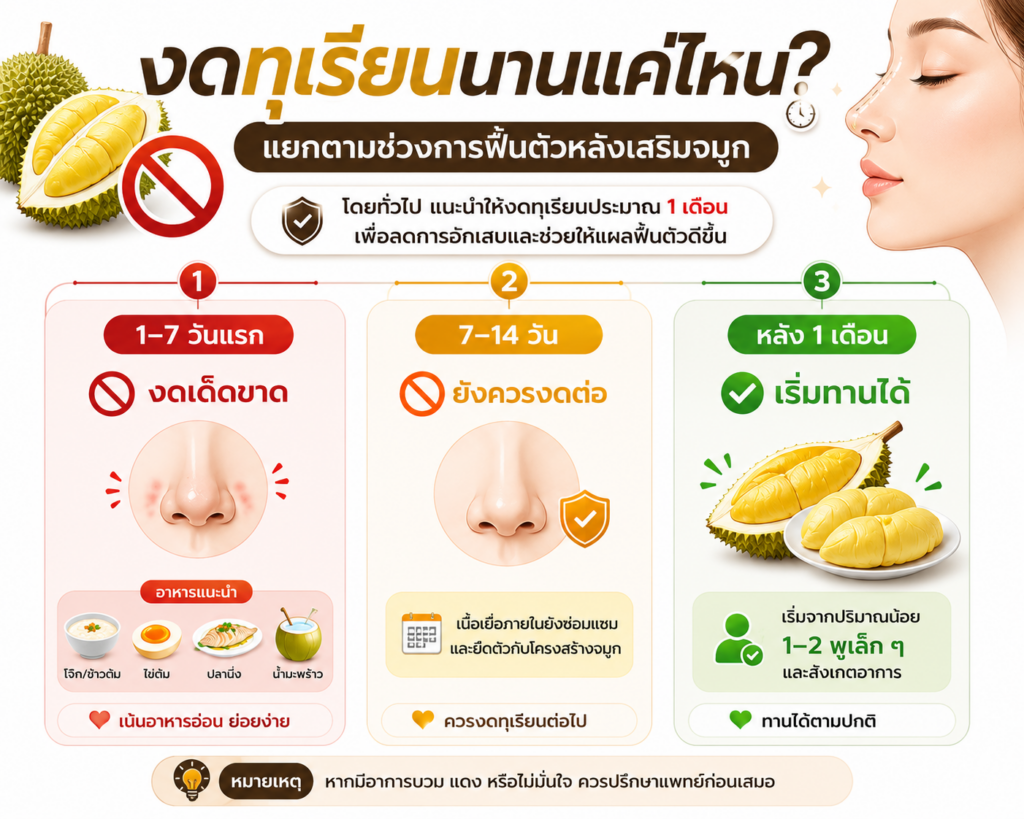
- Days 1–7
The first week after surgery is characterized by swelling and the body’s natural inflammatory response. During this time, damaged tissues begin to repair, and the surgical incision starts to heal. Choosing appropriate foods is especially important.
Focus on soft, easy-to-digest foods and stay well hydrated. Suitable options include rice porridge, soft-boiled eggs, steamed fish, and non-irritating fruits and vegetables. It is best to avoid durian until the wound has begun to heal.
- Days 7–14
During the second week, the internal tissues continue to heal and gradually adapt to the newly reconstructed nasal structure.
If possible, continue avoiding durian during this period to allow the tissues to heal and postoperative swelling to continue improving.
- After 1 Month
By one month after surgery, most patients experience significant healing and a noticeable reduction in swelling. If your recovery is progressing normally and there are no complications, you may gradually reintroduce durian into your diet. Start with a small portion—such as one or two small pieces—and monitor your body’s response before consuming more.
What Foods Should I Avoid After Rhinoplasty?
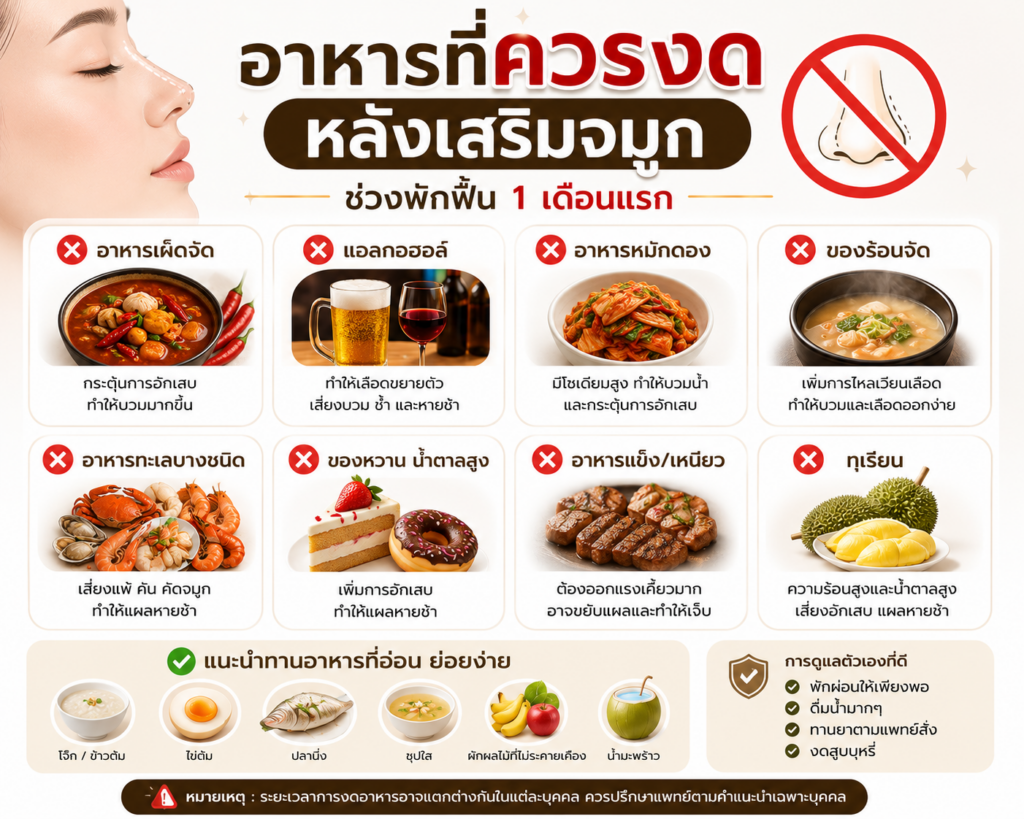
Durian is not the only food to be mindful of during the recovery period. Several other foods and beverages are also best limited or avoided while your surgical wound is healing. For a complete guide to your post-rhinoplasty diet, read our article: What to Eat After Rhinoplasty: Foods to Enjoy and Foods to Avoid During Recovery.
Spicy Foods
Spicy foods do not directly cause wound infections. However, they may increase nasal secretions, sweating, or a sensation of body heat in some individuals, which can be uncomfortable during the early stages of recovery. If spicy foods trigger these symptoms, it is best to avoid them until your recovery is further along.
Fermented Foods
Fermented foods such as kimchi, pickled vegetables, or other traditionally fermented products are generally safe when prepared under proper food safety standards. However, during the early recovery period, it is advisable to avoid fermented foods from unreliable sources or products that may carry a higher risk of contamination. Choosing freshly prepared, hygienic foods can help reduce the risk of foodborne illness while your body is healing.
Raw or Undercooked Foods
Raw or undercooked foods including raw meat, sushi, raw shrimp, or unwashed vegetables may contain bacteria, parasites, or other harmful microorganisms. Although a healthy immune system can usually manage these risks, your body is directing much of its energy toward tissue repair and wound healing after surgery. During recovery, choose freshly cooked, hygienically prepared foods until your surgical wound has healed well.
Alcohol and Smoking
Avoiding alcohol and smoking is one of the most important recommendations after rhinoplasty. Alcohol may increase swelling and can interact with certain medications prescribed after surgery. Smoking, particularly nicotine, reduces blood flow to healing tissues, significantly delaying wound healing and increasing the risk of postoperative complications. The American Society of Plastic Surgeons recommends avoiding both smoking and alcohol before and after surgery to promote optimal healing.
Seafood
As a precaution, many surgeons recommend avoiding seafood during the first month after rhinoplasty, particularly shrimp, crab, and squid. This is especially important for individuals with a history of seafood allergies, as allergic reactions may cause itching, rashes, swelling, or inflammation that can be mistaken for postoperative complications.
During the recovery period, it is generally recommended to choose easily digestible, well-cooked sources of protein, such as freshwater fish, chicken, and eggs. These foods provide high-quality protein that supports tissue repair and wound healing.

Foods to Eat, Limit, or Avoid After Rhinoplasty
| Food / Beverage | Recommendation | Recovery Period | Reason |
|---|---|---|---|
| Durian | Avoid | First month | High in calories, sugar, and fat. Consuming large amounts may not be ideal during the early recovery period. |
| Ripe Mango | Consume in Moderation | First 1–2 weeks | Relatively high in natural sugars. Eat in moderation. |
| Ripe Papaya | Recommended | From Day 1 | Easy to digest and rich in vitamins and dietary fiber, supporting digestive health. |
| Pineapple | Recommended | From Day 1 | Contains vitamin C and antioxidants. Consume in moderation. |
| Oranges | Recommended | From Day 1 | Rich in vitamin C, which supports normal collagen production and wound healing. |
| Guava | Recommended | From Day 1 | Excellent source of vitamin C to support recovery. |
| Kiwi | Recommended | From Day 1 | Rich in vitamin C and antioxidants. |
| Dragon Fruit | Recommended | From Day 1 | High in dietary fiber and supports healthy digestion. |
| Apple | Recommended | From Day 1 | Provides antioxidants and dietary fiber. |
| Cherries | Recommended | From Day 1 | Rich in antioxidants and nutrients that support overall recovery. |
| Eggs | Recommended | From Day 1 | Excellent source of high-quality protein for tissue repair. |
| Freshwater Fish / Steamed Fish | Recommended | From Day 1 | High-quality protein that is easy to digest and suitable during recovery. |
| Tofu | Recommended | From Day 1 | Easily digestible plant-based protein. |
| Shrimp, Crab, Squid | Use Caution | First month | Best avoided during early recovery, especially for individuals with a history of seafood allergies. |
| Spicy Foods | Avoid | First month | May increase nasal secretions and cause discomfort during recovery. |
| Fermented Foods | Avoid | First month | Choose freshly prepared foods to minimize the risk of foodborne illness during recovery. |
| Raw or Undercooked Foods | Avoid | First month | May contain bacteria or parasites that increase the risk of foodborne illness. |
| Alcohol | Avoid | First month | May increase swelling and interfere with the body’s normal healing process and certain medications. |
| Smoking | Avoid | First month | Reduces blood flow to healing tissues and delays wound healing. |
| Coconut Water | Recommended | From Day 1 | Helps maintain hydration and replenish electrolytes. |
| Gotu Kola Juice | Recommended | From Day 1 | Commonly consumed during recovery and may encourage adequate fluid intake. |
| Instant Noodles | Avoid | First month | Typically high in sodium, and some varieties are also spicy, making them less suitable during the early recovery period. |
What Foods Can Help Support Recovery After Rhinoplasty?
In addition to avoiding certain foods, choosing a nutritious diet plays an important role in supporting recovery after rhinoplasty. During the healing process, the body requires adequate amounts of protein, vitamin C, and antioxidants to support tissue repair, reduce postoperative swelling, and promote normal wound healing.
- Vitamin C-Rich Fruits
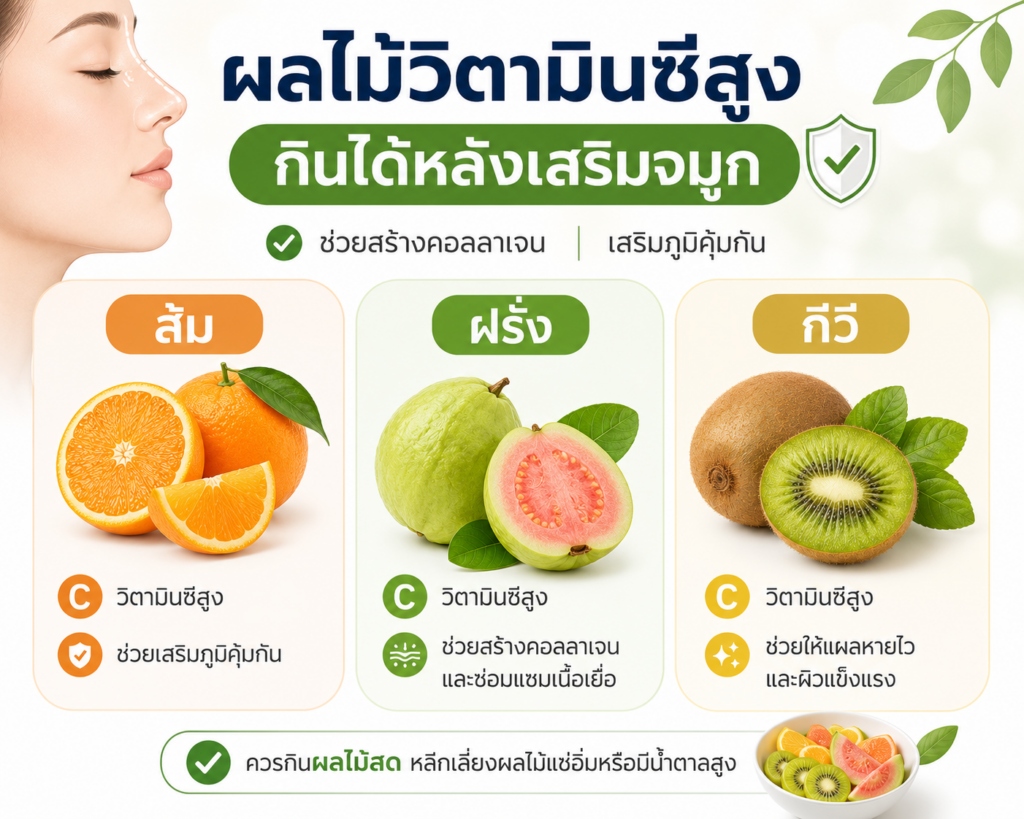
Fruits rich in vitamin C, such as oranges, guava, kiwi, and dragon fruit, are excellent choices during recovery. Vitamin C plays an essential role in collagen production, which is necessary for repairing the skin and soft tissues after surgery. Guava and kiwi are particularly rich sources of vitamin C, making them especially beneficial during the healing process.
- High-Quality Protein
Protein is one of the most important nutrients for tissue repair and the formation of new cells. Choose easily digestible sources of protein, such as freshwater fish, steamed fish, eggs, and tofu. These foods provide essential amino acids that support tissue repair without placing unnecessary stress on the digestive system.
For more information about eating eggs after rhinoplasty, read our article: Can You Eat Eggs After Rhinoplasty? The Best Foods to Support Wound Healing After Nose Surgery.
- Recommended Drinks During Recovery
Coconut water is a natural source of electrolytes that helps maintain hydration and fluid balance during recovery. Staying well hydrated may help support the body’s normal healing process.
Gotukola juice is also a popular beverage during the recovery period. While there is limited clinical evidence that it directly accelerates wound healing, it can help increase daily fluid intake and serves as a good alternative to sugar-sweetened beverages.
- Vegetables That Support Wound Healing
Leafy green vegetables, broccoli, and tomatoes provide essential vitamins, minerals, and antioxidants that help support the body’s natural recovery after surgery. Eating a variety of colorful vegetables together with adequate protein helps ensure balanced nutrition, which plays an important role in tissue repair and wound healing.
Frequently Asked Questions About Diet After Rhinoplasty
Can I Eat Durian 3 Days After Rhinoplasty?
It is not recommended. The first 3–7 days after rhinoplasty represent the initial stage of wound healing, during which the body undergoes a natural inflammatory response to repair damaged tissues. This is also when postoperative swelling is usually at its peak.
Because durian is relatively high in sugar and calories and may cause some people to feel warmer after eating it, it is best to avoid it during the early recovery period. In general, surgeons recommend waiting at least one month before reintroducing durian into your diet to allow the tissues to heal and swelling to subside.
Can I Eat Durian After My Stitches Are Removed?
Not yet. Although stitch removal indicates that the external incision has healed, the deeper tissues beneath the skin are still undergoing repair.
For optimal recovery, it is generally recommended to continue avoiding durian until one month after surgery.
Can I Eat Durian One Month After Rhinoplasty?
In most cases, yes. By one month after surgery, the majority of the healing process has taken place, and postoperative swelling has significantly improved.
However, it is best to start with a small portion and monitor your body’s response. If you still have noticeable swelling, pain, or any concerns about your recovery, consult your surgeon before resuming your regular diet.
What Happens If I Eat Durian Too Soon After Rhinoplasty?
Eating durian does not necessarily mean that complications will occur. Many people experience no problems at all. However, if you notice unusual swelling, increasing pain, redness around the surgical site, or other concerning symptoms after eating durian during the early recovery period, contact your surgeon for an evaluation. These symptoms are not specific to durian and may be related to the normal healing process or other postoperative conditions.
Can I Eat Eggs After Rhinoplasty?
Yes. Eggs are an excellent source of high-quality protein, which plays an important role in tissue repair and normal wound healing. They can usually be eaten from the first day after surgery. Soft-boiled eggs and steamed eggs are particularly good options because they are easy to digest and well suited for the recovery period.
For more information, read our article: Can You Eat Eggs After Rhinoplasty? The Best Foods to Support Wound Healing After Nose Surgery.
How to Care for Yourself During Recovery for Optimal Healing and the Best Results
- Diet During the first month after rhinoplasty, avoid durian, spicy foods, fermented foods, raw or undercooked foods, alcohol, and smoking. Instead, focus on a balanced diet rich in high-quality protein, vitamin C-rich fruits, and leafy green vegetables to support tissue repair and normal wound healing.
- Sleeping Position Sleep with your head elevated during the first 1–2 weeks after surgery. Elevating your head helps reduce postoperative swelling by minimizing fluid accumulation. Avoid sleeping on your side to prevent unnecessary pressure on your nose.
- Physical Activities Avoid strenuous exercise, heavy lifting, and activities that may increase blood pressure during the first month after surgery, as these may contribute to increased swelling and interfere with the healing process.
- Wound Care Keep the surgical wound dry during the first 7 days, unless otherwise instructed by your surgeon. Avoid squeezing, rubbing, or applying pressure to your nose, and clean the wound exactly as directed by your healthcare provider.
Can You Eat Durian After Rhinoplasty? Key Takeaways
In general, it is recommended to avoid eating durian for at least one month after rhinoplasty, as this is the period when your body is actively repairing tissues and healing the surgical wound. Choosing a balanced diet and limiting foods that are high in sugar and calories can help support normal wound healing and postoperative recovery.
During the recovery period, prioritize high-quality protein, vitamin C-rich fruits, leafy green vegetables, and adequate hydration to provide your body with the nutrients it needs for tissue repair. After one month, if your recovery is progressing normally and there are no complications, you may gradually reintroduce durian into your diet. Start with a small portion and monitor your body’s response. If you experience persistent swelling, unusual pain, or have any concerns about your recovery, consult your surgeon promptly.
Reference
American Society of Plastic Surgeons (ASPS). Rhinoplasty (Nose Surgery). Available from: https://www.plasticsurgery.org/reconstructive-procedures/rhinoplasty [Accessed 8 June 2026].


สำหรับผู้อ่านทุกท่านที่มีข้อสงสัยเพิ่มเติม ทีมแพทย์ We Clinic ยินดีให้คำปรึกษาฟรี
โดยไม่มีค่าใช้จ่าย หรือสามารถปรึกษาหมอทาง facebook หรือ Line ได้ที่นี่เลยครับ