



The chin may appear to be a small facial feature, but it plays a significant role in overall facial balance. Even a slightly short chin or a receding chin can make the lower face look disproportionately short, causing the face to appear flat or lacking dimension. This subtle imbalance often affects facial harmony and may lead to a loss of confidence sometimes without realizing the true cause.
In this article, WE Clinic will guide you through a clear understanding of what a short chin is, what causes it, how to recognize its key characteristics, and the available treatment options. These approaches aim to restore facial proportions and help achieve a naturally longer, more refined facial appearance.
What Is a Short Chin?
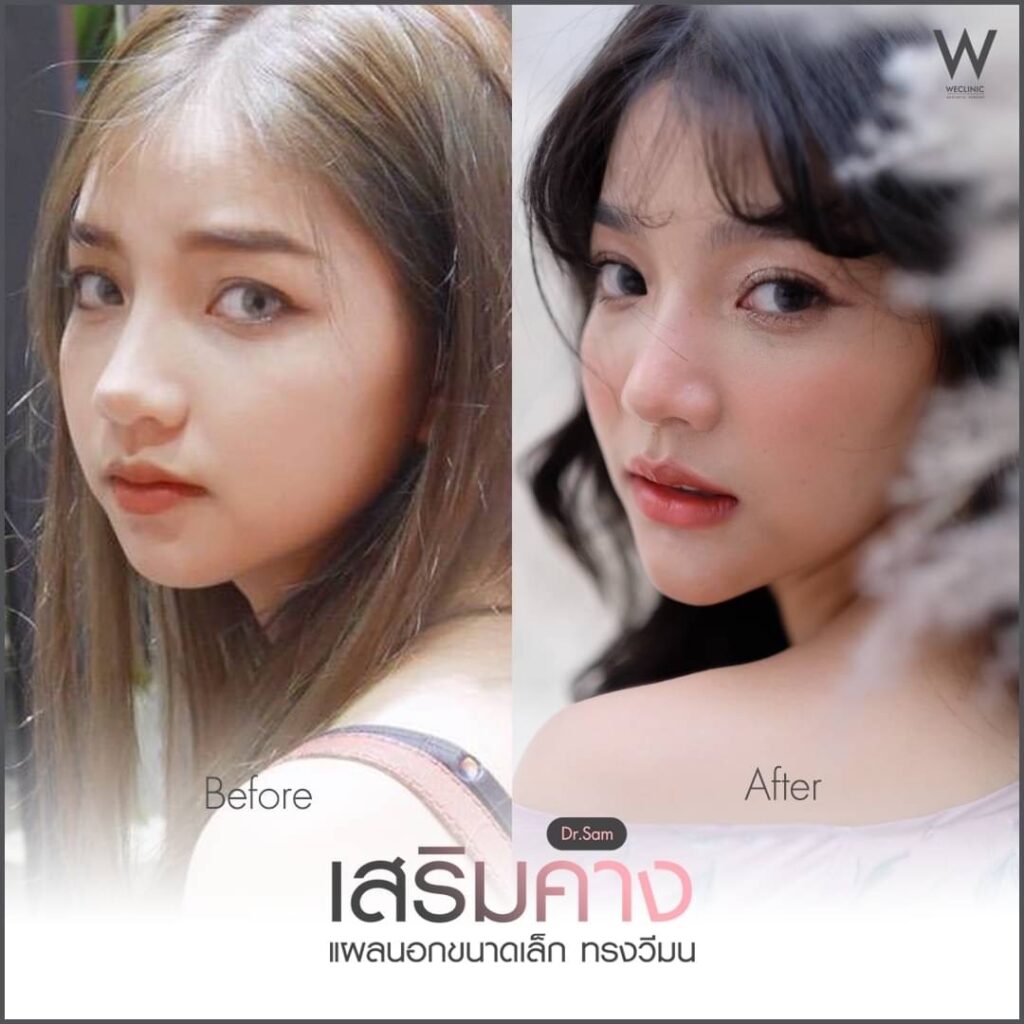
A short chin also known as Short Chin or microgenia is a condition in which the lower jaw appears shorter than what is considered proportionate to the overall facial structure. This imbalance can cause the face to look shorter, rounder, or lacking in definition.
The condition is especially noticeable when viewed from the side. In individuals with a short chin, the alignment of the facial profile line—connecting the nose, lips, and chin—often falls outside a balanced, harmonious line, affecting the overall facial contour and proportions.
What Causes a Short Chin?
A short chin most commonly results from genetic factors or incomplete development of the lower jaw. This condition may be present from birth or gradually become more noticeable as facial structures mature over time. The main causes can be classified as follows:
1. Genetic Factors
Genetics play a significant role in determining facial bone structure. Some individuals naturally have a shorter chin or a smaller lower jaw, which can make the lower face appear shorter, rounder, and less defined.
2. Incomplete Skeletal Development
In some cases, the lower jaw does not develop fully or grows in a backward position—a condition medically referred to as mandibular hypoplasia, which is relatively common among Asian populations.
A study by Lai et al. (2025, Nature Journal) reported that conditions such as a short chin or micrognathia are often associated with abnormalities in the development of facial bone and muscle cells during the embryonic stage. This results in a retruded chin that lacks harmony with other facial features.
3. Malocclusion (Abnormal Bite Alignment)
Dental conditions such as excessive overbite or protruding teeth can cause the lower jaw to appear retruded, making the chin look shorter. These cases often require joint evaluation by both aesthetic specialists and dentists or orthodontists.
4. Childhood Habits and Trauma
During childhood, the jawbone is still developing. Trauma or impact to the chin area may interfere with normal bone growth, leading to asymmetry or improper alignment that becomes more apparent later in life.
In addition, certain habits such as sleeping face-down, frequent tongue thrusting, or thumb sucking can alter pressure on the jaw and teeth. Over time, these forces may affect jaw growth direction, causing the chin to appear recessed or short in adulthood.
5. Hyperactive Mentalis Muscle
An overactive mentalis muscle can make the chin appear shorter or dimpled, sometimes creating visible skin rippling when speaking or smiling.
6. Facial Fat Distribution
Excess fat accumulation around the cheeks or chin can obscure the jawline, making the chin appear shorter even when the underlying bone structure is normal. This is commonly seen in individuals with rounder facial shapes or fuller cheeks, where fat tissue masks the mandibular contour.
In such cases, facial balance may be improved through procedures such as double chin surgery combined with external incision chin augmentation. These approaches help enhance chin projection and definition, resulting in a naturally longer-looking face with improved contour and proportion.
How to Tell If You Have a Short Chin
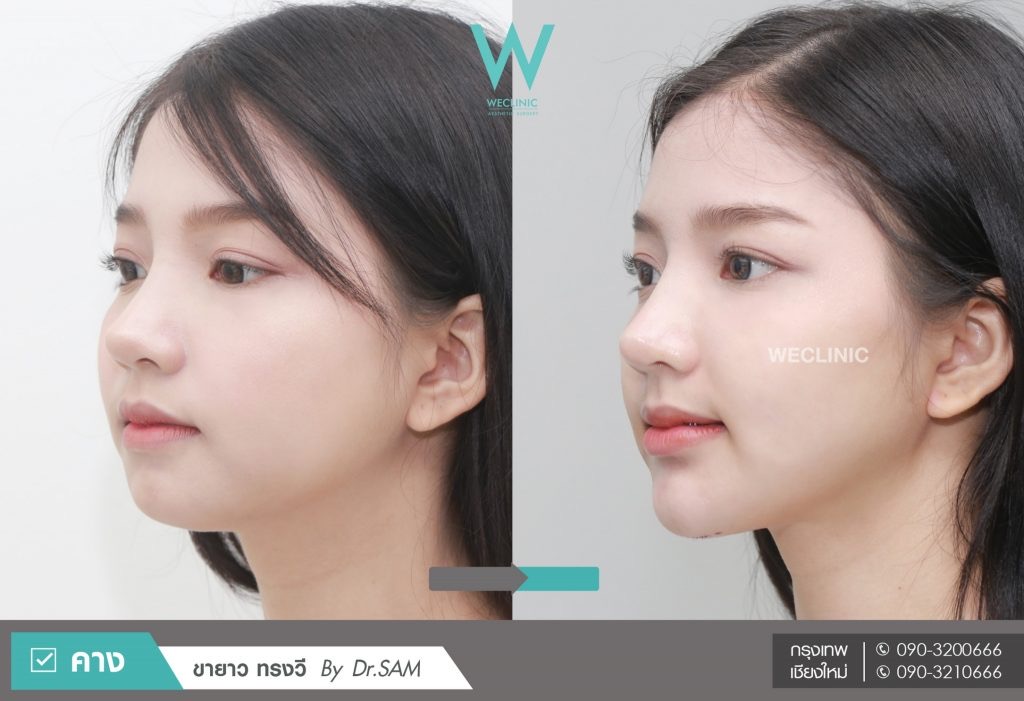
Many people wonder whether their chin is truly short or if it simply feels that way. A basic self-assessment can be done by evaluating overall facial proportions using a simple vertical facial analysis.
Start by dividing the face into three equal vertical sections:
- Upper face: from the hairline to the eyebrows
- Middle face: from the eyebrows to the tip of the nose
- Lower face: from the tip of the nose to the tip of the chin
A well-balanced face, based on the golden ratio, typically follows a proportion close to 1:1:1. However, if the lower face appears noticeably shorter than the other sections—for example, 1:1:0.8—this may indicate a short chin or a receding chin.
This facial pattern is commonly observed among Asian individuals, who often have a naturally shorter or less projected lower jaw structure. As a result, chin enhancement procedures are frequently chosen to restore facial balance.
In many cases, chin filler injections are used to add length and projection to the chin, enhancing facial dimension. For individuals with more significant skeletal deficiency, chin augmentation with silicone implants may be considered to achieve proportions that better align with the underlying bone structure. The overall result is a face that appears longer, more balanced, and naturally refined.
If you are still unsure whether your chin is truly short, a professional assessment can provide clarity. WE Clinic offers complimentary facial evaluations simply submit a facial photo via Facebook at facebook.com/weclinicclub or LINE at @weclinic, and our medical team will be happy to assist.
What Does a Short Chin Mean in Facial Feng Shui? Is It Considered Unfavorable?
In traditional Chinese facial feng shui, the chin is regarded as the foundation of one’s later life, symbolizing long-term stability, financial security, and relationships with supporters or subordinates.
From this perspective, a short chin refers to a chin that appears relatively short or retruded, which may cause the face to look less defined or unbalanced. In feng shui beliefs, this feature is often viewed as less favorable.
According to traditional interpretations, individuals with this facial characteristic may be perceived as having lower emotional endurance, being prone to overthinking or anxiety, and lacking self-confidence. These traits are believed to affect interpersonal relationships, reduce perceived charm, and potentially attract less supportive people into one’s life.
However, it is important to note that these interpretations are based solely on traditional beliefs rather than scientific evidence. In modern society, many individuals choose to enhance their appearance and confidence through self-care, personal development, or medical aesthetic treatments such as chin reshaping. When approached thoughtfully, these options may help improve overall facial harmony and personal confidence, regardless of traditional feng shui interpretations.
What Are the Characteristics of a Favorable Chin in Facial Feng Shui?
In facial feng shui, a well-balanced and favorable chin is typically full, smooth, and proportionate to the overall facial structure. It should not be overly narrow, pointed, or excessively short. Ideally, the chin has a gently rounded contour and projects slightly forward in harmony with the face, creating a sense of depth and stability.
According to traditional beliefs, such chin characteristics are associated with long-term stability in later life, career growth, financial security, and asset accumulation. A well-shaped chin is also believed to attract supportive relationships and positive connections, contributing to a smoother and more balanced life overall.
How Does a Short Chin Affect Facial Appearance?
A short chin does not merely cause a minor aesthetic concern—it can significantly affect overall facial balance, including proportions, depth, and the sense of structural stability of the face.
1. Lack of Facial Dimension
When the chin is short or retruded, the lower face loses depth, disrupting the continuity between the nose, lips, and chin. As a result, the face may appear flat or less defined and can even look younger than the actual age due to the absence of clear structural support.
2. Imbalanced Facial Proportions
According to the golden ratio (1:1.618), the upper, middle, and lower thirds of the face should be relatively proportional in length. In individuals with a short chin, the lower facial third is noticeably shorter, leading to an imbalanced appearance—particularly evident in side-profile views.
3. Poorly Defined Jawline
A short or retruded chin often causes the jawline to blend into the neck, making the chin angle less distinct. This can result in a softer, less contoured appearance and may be mistaken for excess submental fat, even when no true double chin is present.
4. Reduced Facial Harmony
From a visual perception standpoint, a face with an overly short or retruded chin may convey a sense of structural instability. The lack of a balanced anchor point between the upper and lower facial regions can reduce overall facial harmony and softness.
A systematic review titled “Chin Augmentation Techniques: A Systematic Review” published in Aesthetic Plastic Surgery (2023) reported that even subtle adjustments to chin length and projection can significantly improve the perception of facial balance. These changes help the face appear longer, more proportionate, and noticeably more harmonious.
How Can a Short Chin Be Corrected? Which Option Is Right for You?
Today, there are several effective approaches to correcting a short chin, each offering different outcomes depending on the underlying cause, the severity of the condition, and individual aesthetic goals. In clinical practice, treatment options are generally categorized into the following approaches:
1. Chin Filler Injections
Chin filler injections are a quick and minimally invasive option, ideal for individuals with a mild short chin or those who wish to try facial contouring without a permanent commitment.
Hyaluronic acid (HA)–based fillers are carefully injected into the chin area to enhance length and projection, improving overall facial dimension. The advantages include immediate visible results, no downtime, and the ability to dissolve the filler if further adjustments are desired. Results typically last 6–12 months, after which the filler gradually breaks down naturally.
2. Chin Augmentation with Silicone Implants
For individuals with a significantly short or retruded chin due to skeletal structure, silicone chin augmentation provides a more definitive and long-term solution.
The surgeon custom-selects the implant size, angle, and projection to match each patient’s underlying bone structure, helping to create a balanced, elongated facial profile. While this procedure requires a short recovery period, it should be performed by an experienced facial plastic surgeon for optimal safety and outcomes.
At WE Clinic, chin augmentation performed by Dr. Sam is distinguished by a fully customized implant design approach. Each case is carefully analyzed from multiple facial dimensions both frontal and lateral to determine the ideal chin length, projection angle, and curvature. Medical-grade silicone implants are meticulously refined to fit securely against the chin bone, reducing the risk of implant movement or asymmetry over time.
In addition, WE Clinic emphasizes a small, concealed external incision beneath the chin, promoting faster healing, minimal scarring, and natural-looking results.
3. Sliding Genioplasty
Sliding genioplasty is a surgical procedure that directly addresses the chin bone itself, making it suitable for patients with severe chin deficiency caused by genetics or jaw structure.
During the procedure, the lower portion of the chin bone is precisely cut and advanced forward to achieve the desired length and angle. This method offers permanent, natural-looking results and corrects skeletal imbalance at its source. However, it requires a high level of surgical expertise and involves a longer recovery period compared to other options.
4. Orthodontic or Dental Treatments
In some cases, a short chin appearance is not caused by the chin bone alone, but by misalignment between the teeth and jaw.
Orthodontic treatment or specialized dental appliances can help reposition the jaw into a more harmonious alignment, which may improve chin projection without surgery. This approach is suitable for individuals with mild structural issues who prefer non-surgical correction.
5. Fat and Soft Tissue Contouring Around the Chin
Excess fat accumulation in the cheeks or submental area can obscure the chin contour, making the chin appear shorter than it actually is.
In such cases, double chin surgery or liposuction can enhance jawline definition and restore facial balance. These procedures may be performed alone or in combination with chin augmentation for more comprehensive contouring, resulting in a slimmer, more elongated facial appearance.ิติให้ใบหน้า ข้อดีคือเห็นผลทันทีหลังทำ ไม่ต้องพักฟื้น และสามารถสลายออกได้
Chin Filler vs. Chin Implant: Which Option Is Right for You?
| Comparison | Chin Filler (Filler Chin) | Silicone Chin Implant Surgery (Chin Implant – WE Clinic) |
|---|---|---|
| Best for | Mild short chin, slightly “cut” chin shape, minor dimpling; ideal for those who want to try contouring without surgery. | Significantly short chin or structural/bony deficiency; ideal for those seeking clear, long-lasting results. |
| Procedure | Hyaluronic acid (HA) filler is injected into the chin to add length, projection, and improve the chin angle. | A surgeon plans the chin in a 3D facial assessment, selects an appropriate implant size, and uses specialized techniques to achieve a secure, close fit. |
| Results | Immediate improvement after injection; the chin looks more defined and the face often appears slimmer and more balanced. | Long-lasting/permanent structural enhancement; improved proportions and a more defined chin contour from multiple angles. |
| Longevity | Typically 6–12 months, depending on filler type and aftercare. | Permanent/long-term, often maintaining shape for many years without repeat procedures. |
| Downtime | Minimal to none; most people return to normal activities right away. | Recovery is usually 5–7 days; small incision and relatively fast healing. |
| Pain / Aftercare | Mild discomfort; slight tenderness or swelling may occur for 1–2 days. | Mild discomfort in the early phase; aftercare is generally straightforward with minimal visible scarring. |
How to Choose a Clinic for Correcting a Short Chin
Before deciding how to correct a short chin whether through chin filler or chin augmentation surgery it’s important to make sure you choose a clinic that is both safe and professionally qualified. The chin may be a small area, but it plays a major role in overall facial balance, so proper assessment and technique matter.
Here are key points to check before choosing a clinic:
- Proper licensing and medical standards The clinic should be legally registered, hygienic, and compliant with medical safety standards.
- A qualified doctor with facial-contouring expertise Choose a physician with proven experience in both chin filler injections and chin implant/augmentation, especially for short chin correction.
- Authentic, certified materials Fillers should be genuine products with appropriate regulatory approval. For implants, the silicone should be medical-grade and sourced from reputable manufacturers.
- Reliable before-and-after results Look for credible reviews from real patients and clear before-and-after cases—ideally those with concerns similar to your short chin profile.
- Personalized facial assessment prior to treatment A professional clinic should evaluate your facial structure individually and recommend an approach that suits your proportions—such as determining the appropriate chin length and projection angle for both aesthetics and overall facial harmony.
- Post-treatment follow-up and aftercare The clinic should provide proper follow-up, including monitoring swelling, incision healing (if surgery is performed), and ensuring the chin shape settles safely and naturally.
How Much Does Short Chin Correction Cost?
The cost of correcting a short chin with chin augmentation can vary depending on the technique used and the complexity of each individual case. At WE Clinic, we offer chin augmentation procedures designed to restore facial balance and enhance overall proportions.
Our starting price is THB 19,900 (reduced from THB 25,000). A limited-time promotion is also available for clients who participate in a review program, which includes complimentary chin contouring (chin shaving) valued at THB 5,000.
Every case is assessed individually by a qualified physician. A personalized consultation is essential to determine the most appropriate treatment plan and an accurate cost estimate—ensuring both safety and results that suit your facial structure.
Summary
A short chin is commonly caused by genetic factors or incomplete development of the lower jaw, which can make the face appear flatter and less defined. Chin filler injections are a popular option for mild cases, offering immediate improvement in facial balance with little to no downtime.
For individuals seeking a more permanent and natural-looking result, external incision chin augmentation may be considered. This approach can enhance chin length and projection while creating a harmonious contour that better complements the overall facial structure.
Medical References
- Lai, S. et al. Feeding and respiratory outcomes in infants with micrognathia. Nature Journal. 2025.
- Xie, L. et al. Correcting the Broad, Flat and Short Chin Using Modified M-shaped Genioplasty. Aesthetic Plastic Surgery. 2023.


สำหรับผู้อ่านทุกท่านที่มีข้อสงสัยเพิ่มเติม ทีมแพทย์ We Clinic ยินดีให้คำปรึกษาฟรี
โดยไม่มีค่าใช้จ่าย หรือสามารถปรึกษาหมอทาง facebook หรือ Line ได้ที่นี่เลยครับ