

Are Uneven Nostrils Normal?
Uneven nostrils are a common concern, whether you have only recently noticed the difference or have undergone rhinoplasty and feel that your nostrils look asymmetrical.
In this article, the doctor explains the possible causes of uneven nostrils, how to check them yourself, and treatment options that may be appropriate for different cases, helping you better understand the condition before consulting a doctor.
Key Takeaways
- It is natural for the two nostrils to have some degree of asymmetry. This may be related to the shape of the nose and each person’s natural facial asymmetry.
- Differences in the height and alignment of facial structures can affect the position of the nasal area, making the nostrils appear uneven, especially from certain angles or in close-up photos.
- After rhinoplasty, the nostrils may appear uneven during the first 1–3 months due to swelling and differences in how quickly the tissues on each side settle. The asymmetry may gradually become less noticeable as the nose continues to heal.
Table of Contents
What Causes Congenital Nostril Asymmetry?
Congenital nostril asymmetry can result from differences in the structures on each side of the nose, including the alar cartilage, nasal septum, alar base, and the thickness of the alar soft tissue. These differences can cause the nostrils to vary in size, shape, or angle.
Another factor that is often overlooked is the difference in facial height between the two sides. Since the nasal alae rest on the underlying facial structure, if one side of the face is slightly higher or lower than the other, the nasal alae may also sit at different levels. This can make the nostrils appear uneven when viewed from the front or from certain angles, even when the nostrils themselves are not the direct cause.
This type of asymmetry can occur even in people who have never experienced facial trauma or undergone nasal surgery. Therefore, an assessment should consider the nasal structure, the level of the nasal alae, and the overall facial structure together. This helps identify where the visible asymmetry originates and determine the most appropriate treatment or correction approach for each individual.
Why Do Nostrils Look Uneven After Rhinoplasty?
After rhinoplasty, the two nostrils may appear uneven during the early stages of recovery because swelling and tissue response can differ from one side to the other. One side may be more swollen, take longer to subside, or have a different degree of skin tension. As a result, the nasal alae may temporarily sit at different levels, making the nostrils appear asymmetrical during the healing process.
During the first 1–3 months, the nose continues to change as swelling gradually subsides, the surgical wounds heal, and the tissues adjust. As the nose continues to settle and heal, the difference between the nostrils may gradually become less noticeable.
7 Causes of Uneven Nostrils
1. Differences in Facial Height Between the Two Sides
The nasal alae are supported by the underlying facial structure. If the left and right sides of the face are at slightly different heights, the nasal area may also sit at different levels, making the nostrils appear uneven when viewed from the front or below.
Therefore, assessing uneven nostrils should not rely solely on drawing reference lines around the nose. The doctor should also consider overall facial symmetry, cheek level, lip alignment, and the position of the alar bases.
2. Differences in the Alar Base or Alar Soft Tissue
The nasal alae are not made up of cartilage alone. They also contain skin, fat, and soft tissue. If the tissue on each side differs in thickness, curvature, or attachment, the nasal area may sit at different levels and the nostrils may appear different in shape.
This should be assessed together with the surrounding structures because even when the difference appears to come from the nasal area externally, the underlying cause may be related to the cartilage or the facial structure beneath them.
3. Differences in the Alar Cartilage
The lower lateral cartilage is an important structure that helps determine the shape of both the nasal tip and the nostrils. If the cartilage on each side differs in curvature, angle, or position, the nostrils may appear uneven. For example, one nostril may look wider or longer, or have a different curvature from the other.
Asymmetry of the alar cartilage may be congenital or develop later due to trauma or previous nasal surgery, which can alter the position or angle of the cartilage on either side. These changes can subsequently affect the shape of the nasal tip and nostrils.
When planning correction for uneven nostrils, the doctor will therefore assess the balance of the lower lateral cartilages on both sides. Depending on the individual case, the position, angle, or orientation of the cartilage may be adjusted to create better balance between the nasal tip and both nostrils.

4. A Deviated or Crooked Caudal Septum
The caudal septum helps support the nasal tip and defines the midline of the nasal base. If this part of the septum is deviated or crooked, it may pull or push the nasal tip toward one side, causing the nostrils to appear uneven.
5. Changes After Rhinoplasty
During the early stages after rhinoplasty, swelling and tissue recovery may occur at different rates on each side, temporarily making the nostrils or nasal alae appear uneven.
Wound healing, skin tension, and tissue position also continue to change during the first several months. Therefore, it is generally important to allow the nose sufficient time to heal and settle before assessing the long-term result.
If significant asymmetry is still noticeable after approximately 6 months, or if there is pain, tightness, or abnormal wound healing, you should return to your doctor for further evaluation.
6. Scar Tissue and Fibrosis After Revision Rhinoplasty
After nasal surgery, the body naturally forms internal scar tissue and fibrosis, even after a single procedure. The tissues around the nasal tip and nostrils may therefore become tighter than those of a nose that has never undergone surgery.
If scar tissue pulls unevenly on the tissues on each side, it can affect the level of the nasal area as well as the size or shape of the nostrils. In some cases, some degree of asymmetry may remain even after certain nasal structures have been corrected.
For patients who have undergone revision rhinoplasty, particularly those with multiple previous surgeries, the doctor will assess skin quality, the amount of scar tissue, tissue condition, and the limitations of further correction before developing a surgical plan suited to the individual nasal structure.
7. Congenital Asymmetry of the Nose and Face
The two nostrils may naturally look different from birth due to congenital asymmetry of the nasal and facial structures. This can result in differences in nostril level even in people who have never undergone nasal surgery or experienced facial trauma.
Therefore, the assessment should consider both the nasal structure and overall facial structure to determine where the asymmetry primarily originates and to plan an appropriate correction based on each individual’s anatomy.
How to Check If Your Nostrils Are Uneven
- Take a straight-on photo in natural light, keeping your head in a neutral position without tilting it up or down.
- Use the rear camera and take photos from approximately the same distance each time to minimize distortion caused by the camera lens.
- Check the facial midline, nasal bridge, and nasal tip to see whether the nose tilts or deviates to either side.
- Compare the level of the nasal alae on both sides, along with the size and shape of each nostril.
- Look for differences in facial height between the two sides, as these may affect the level of the nasal alae and make the nostrils appear uneven.
- Compare the nose from multiple angles, particularly from the front and below, to better assess the relationship between the nostrils and the nasal base.
- If you have recently undergone rhinoplasty, consider how long it has been since surgery. During the first 1–3 months, swelling and tissue recovery may still differ between the two sides, temporarily making the nostrils appear uneven.
Drawing a reference line along the facial or nasal midline can help identify asymmetry, but it should not be used as the only criterion. Uneven-looking nostrils may be related to several factors, including the nasal structure, the level of the nasal alae, facial structure, soft tissue, or scar tissue from previous surgery. Therefore, the overall facial and nasal structure should be considered together.
Signs You Should See a Doctor
After rhinoplasty, some nostril asymmetry during the early stages of recovery may be related to swelling and tissue healing. However, if the asymmetry is still clearly noticeable after approximately 6 months, becomes more pronounced, or is accompanied by other unusual symptoms, you should see a doctor for an evaluation. This can help determine whether the asymmetry is related to the original nasal structure, the healing process, or postoperative changes.
Signs to look out for include:
- The nostrils or nasal alae become noticeably more uneven after the swelling has subsided.
- The incision does not heal normally, or there is persistent pain, tightness, tenderness, swelling, or redness.
- The nose appears crooked, the nasal tip looks twisted, or the nasal alae appear tight or pulled.
- You have difficulty breathing or feel that one nasal passage has become narrower.
- The skin over the nose becomes thinner, the edge of the implant becomes visible, or the nasal tip develops unusual redness.
If you notice any of these signs, it is recommended to see a doctor promptly for a thorough evaluation of the underlying cause and to determine the most appropriate treatment or corrective approach for your individual case.
Can Uneven Nostrils Be Corrected? What Are the Treatment Options?

Uneven nostrils can be corrected, but the appropriate treatment depends on the underlying cause and each individual’s anatomy. This is because the visible asymmetry may not originate from the nostrils alone.
Nostril asymmetry can be associated with several factors, including differences in the level of the nasal alae, facial asymmetry, the existing alar cartilage, the nasal septum, as well as fibrosis or scar tissue from previous surgery that causes tissue contraction. Therefore, the entire nasal and facial structure should be assessed together to identify the underlying cause in each case.
Before planning any correction, the doctor will evaluate the overall structure of the nose and face, including:
- The alignment of the nasal bridge and nasal tip
- The position of the nasal septum
- The shape and strength of the alar cartilage
- The level and thickness of the nasal alae
- Differences in the height of the underlying facial structure
- The quality of the skin and soft tissue
- Fibrosis or scar tissue from previous surgery
Once the cause has been identified, the doctor can determine which areas should be adjusted, how much correction may be possible, and whether other nasal structures also need to be addressed.
For Structural Nostril Asymmetry, Open Rhinoplasty May Be Considered
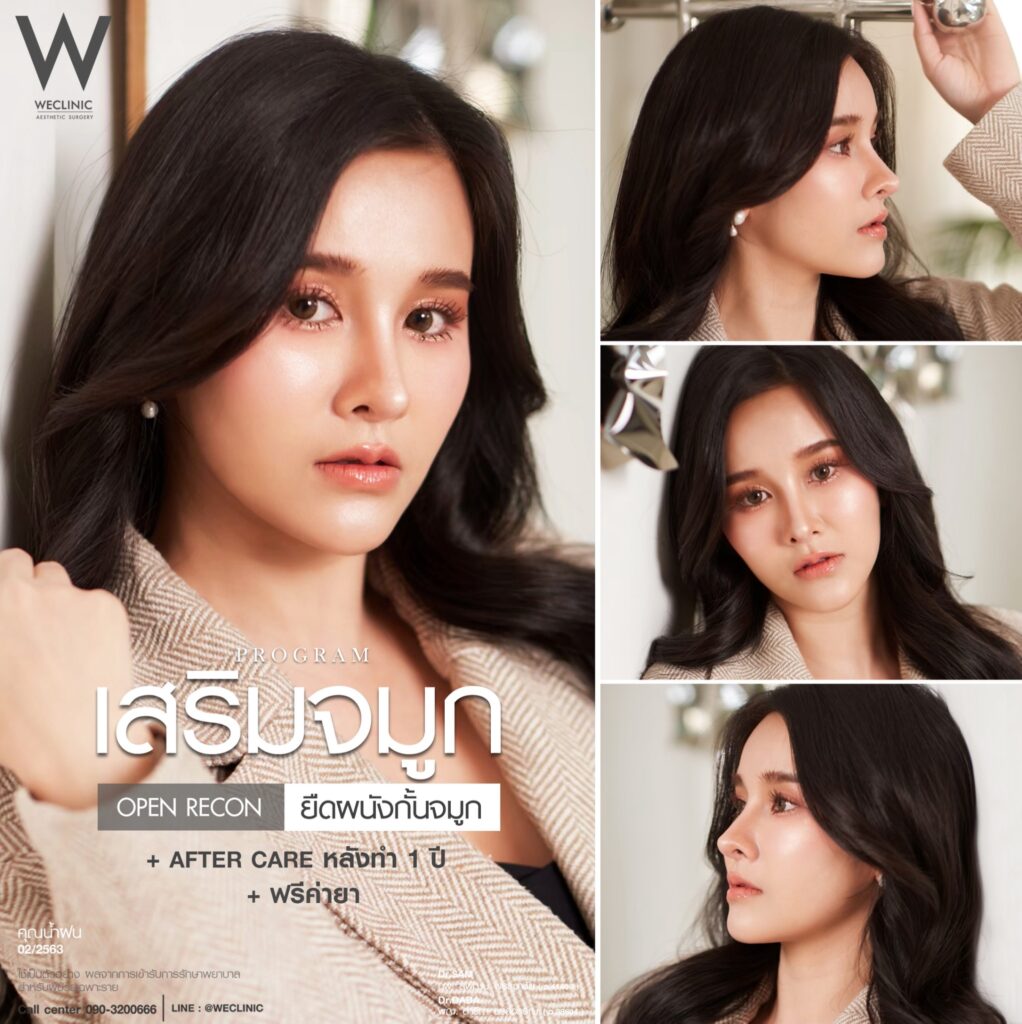
If uneven nostrils are associated with multiple structural factors, such as differences in the level of the nasal alae, facial asymmetry, alar cartilage, the nasal septum, or fibrosis and scar tissue from previous surgery, the doctor may consider Open Rhinoplasty.
The open technique allows the doctor to clearly visualize the internal nasal structures, including the cartilage, nasal septum, and soft tissue around the nasal tip. This can be particularly useful in cases that require adjustments to multiple areas or in complex revision cases.
However, this does not mean that everyone with uneven nostrils needs Open Rhinoplasty. The appropriate correction method should be selected according to the underlying cause and the individual anatomy of each patient.
Treatment Options for Uneven Nostrils Based on the Cause at WE Clinic
- Uneven positioning of the alar cartilage
If the alar cartilage on each side differs in angle or position, the doctor may consider Open Rhinoplasty to adjust the nasal tip structure and reposition the cartilage appropriately. If the nasal tip cartilage is weak or tends to twist or deviate, the doctor may also consider extending or reinforcing the caudal septum to provide additional support to the central nasal structure, bring the nasal tip closer to the midline, and help improve the balance between the shape of both nostrils.
- Deviated or crooked nasal septum
The nasal septum consists of both bone and cartilage, so the doctor must first determine where the deviation is located. If the problem involves the caudal septum, which is closely related to the nasal tip structure, it may cause the nasal tip to deviate and make the nasal alae and nostrils appear different on each side.
In such cases, the doctor may consider adjusting or repositioning the caudal septum together with nasal tip correction to improve the alignment of the nasal tip, nasal alae, and nostrils.
- Uneven or deviated nasal base
If the underlying cause involves the nasal bone base, WE Clinic may use Nasal Osteotomy to reposition the nasal bones and create a narrower, more balanced nasal base. This technique may be considered in selected cases involving a wide, deviated, or uneven nasal base.
- Scar tissue from multiple revision rhinoplasty procedures
Patients who have previously undergone rhinoplasty may develop internal fibrosis and scar tissue, which is part of the body’s natural healing response. Scar tissue can form around implanted materials or cartilage and may contract or pull on the surrounding tissues, contributing to nasal asymmetry.
In these cases, Open Rhinoplasty may be considered to provide access for scar tissue release and correction of the necessary nasal structures, particularly in patients who have undergone multiple previous surgeries or still have existing filler material within the nose.
- Weak or damaged nasal structures in revision cases
If the existing nasal structure is weak or does not provide sufficient support for further correction, the doctor may use autologous cartilage, such as ear cartilage or septal cartilage, to reinforce or reconstruct the nasal framework.
For more information about rhinoplasty, read Rhinoplasty FAQs: Types of Nose Surgery and What to Know Before the Procedure.

How to Care for Yourself After Rhinoplasty
After rhinoplasty, the recovery period is an important time when the tissues are healing and the nasal structures have not yet fully settled. Proper postoperative care can help minimize factors that may interfere with wound healing, reduce pressure or impact on the nose, and support recovery according to the treatment plan.
- Sleep on your back with your head elevated during the early recovery period. This can help reduce swelling and minimize pressure on the nose. Avoid sleeping on your side or stomach while the nose is still swollen and the tissues are healing.
- Avoid touching, squeezing, or pushing the nose. These actions may interfere with tissue healing and the position of the nasal structures while they are still recovering.
- Protect your nose from impact and avoid strenuous activities during recovery. Avoid contact sports, heavy lifting, and activities that may result in impact to the face or nose.
- Attend all scheduled follow-up appointments. The doctor will assess the incision, swelling, tissue tension, and changes in the shape of the nose at different stages of recovery to ensure that healing is progressing as expected.
- Eat a balanced diet that supports tissue repair. Make sure you get enough protein and stay adequately hydrated. Avoid alcohol and smoking during the recovery period, as they may interfere with the wound-healing process.
Uneven Nostrils FAQ: Frequently Asked Questions
Can Congenital Nostril Asymmetry Be Corrected?
Congenital nostril asymmetry may be corrected, but the doctor must first determine which structures are causing the difference. Possible factors include the level of the nasal alae, facial asymmetry, the existing alar cartilage, and the nasal septum, as each cause may require a different treatment approach.
If the underlying cause involves the nasal structures, the doctor may consider adjusting the position or structure of the affected areas to improve symmetry. However, if facial asymmetry also contributes to the difference, correcting the nose alone may have limitations. Therefore, each case should be assessed individually.
How Long Should I Wait If My Nostrils Look Uneven After Rhinoplasty?
During the first 1–3 months after rhinoplasty, the nostrils may appear uneven because swelling and tissue recovery can occur at different rates on each side. The difference may gradually become less noticeable as the nose heals and the tissues begin to settle.
If significant asymmetry is still noticeable after approximately 6 months, or if you experience symptoms such as pain or tightness, you should return to your doctor for further evaluation.
Do Uneven Nostrils Always Require Alar Reduction?
No, alar reduction is not always necessary. It is generally considered when the problem involves the external nasal alae. However, if the asymmetry is caused by internal structures, such as the alar cartilage or nasal septum, alar reduction alone will not correct the underlying cause.
The doctor should therefore assess the nasal structures first to determine the most appropriate treatment for each individual.
Can Uneven Nostrils Affect Breathing?
It depends on the underlying cause. If nostril asymmetry is associated with a deviated nasal septum, it may contribute to difficulty breathing or nasal obstruction on one side.
However, if the difference is caused only by minor variations in the shape of the nasal alae or cartilage, it generally does not affect breathing.
Summary: Uneven Nostrils
Uneven nostrils can be caused by several factors, including congenital structural differences, differences in the level of the nasal alae, facial asymmetry, alar cartilage, the nasal septum, and postoperative swelling.
In particular, during the first 1–3 months after rhinoplasty, the nostrils may still appear uneven because swelling and tissue recovery can occur at different rates on each side. The asymmetry may gradually become less noticeable as the swelling subsides and the nose continues to heal.


สำหรับผู้อ่านทุกท่านที่มีข้อสงสัยเพิ่มเติม ทีมแพทย์ We Clinic ยินดีให้คำปรึกษาฟรี
โดยไม่มีค่าใช้จ่าย หรือสามารถปรึกษาหมอทาง facebook หรือ Line ได้ที่นี่เลยครับ