



Dissolving chin filler is a corrective treatment for individuals who experience concerns such as chin lumpiness, irregular contour, or unsatisfactory results after chin filler injections. This procedure is commonly performed to address aesthetic issues when the outcome does not align with the patient’s expectations.
Many patients have questions regarding safety, how quickly results can be seen, and whether downtime is required. In this article, we will address these concerns in detail, discuss the advantages and limitations of dissolving chin filler, and explore alternative options for chin enhancement that offer natural-looking, long-lasting, and safe results.
What Is Dissolving Chin Filler?
Dissolving chin filler is a corrective procedure that involves injecting an enzyme called Hyaluronidase into areas where hyaluronic acid (HA) filler has been placed. Hyaluronidase works by breaking down HA filler, accelerating its degradation so the body can naturally absorb and eliminate it.
This procedure is commonly performed in patients who experience post-filler concerns such as lumpiness, uneven texture, chin asymmetry, or results that do not meet their aesthetic expectations. In some cases, dissolving chin filler is also used to “reset” the chin area in preparation for a future chin enhancement procedure.
When performed appropriately, dissolving chin filler can help restore the skin and facial contour closer to its original state in a safe and controlled manner. However, it is important to note that hyaluronidase is effective only for genuine hyaluronic acid fillers. It cannot dissolve non-HA fillers, illegal fillers, or unapproved substances, which may instead increase the risk of complications.
For this reason, dissolving chin filler should always be carried out by an experienced medical professional in a certified clinic, where the filler type can be properly assessed and managed safely.
Common Reasons for Dissolving Chin Filler
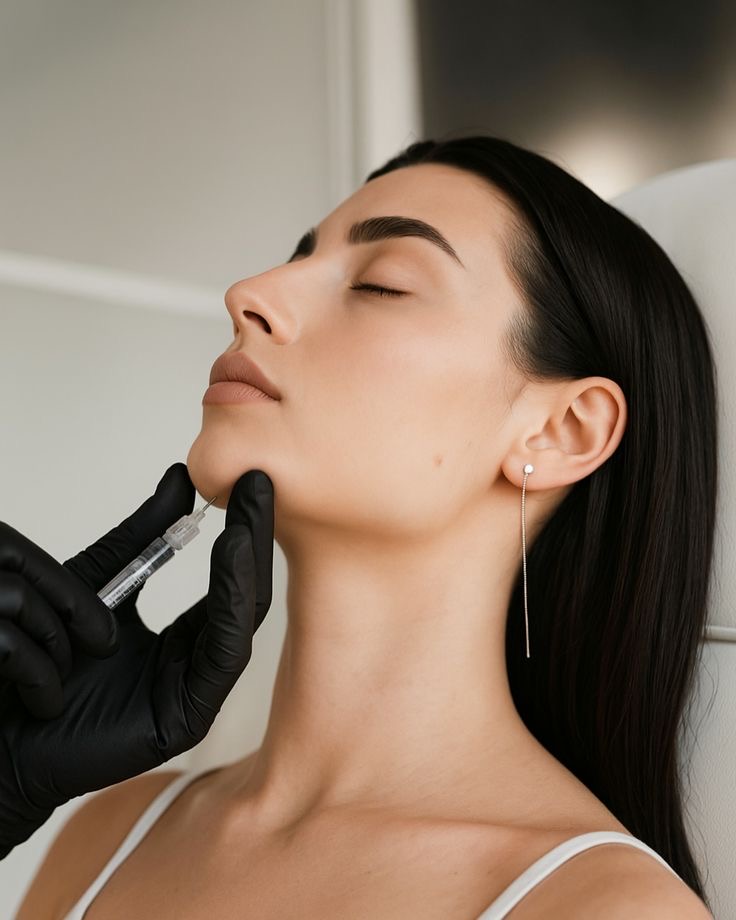
Many patients choose chin filler injections to improve facial balance and achieve a more defined profile. However, results do not always meet expectations. In some cases, patients may experience issues such as filler lumpiness, uneven surface texture, excessive firmness, or an unnatural chin shape.
These concerns often lead patients to consider dissolving chin filler as a corrective step, allowing them to address complications and start fresh. Such problems can arise from several factors, including treatment by an inexperienced injector, improper injection techniques, or the use of non-standardized or low-quality filler products. In addition, injecting an inappropriate amount of filler either too much or too little can disrupt facial proportions and result in an imbalanced appearance.
Another common reason for dissolving chin filler is a change in aesthetic preference over time. Some patients may later feel that the chin shape no longer suits their facial features or personal style, while others may decide to pursue a more permanent solution such as silicone chin augmentation. In these situations, dissolving the filler serves as a reset, helping return the chin area closer to its original state before proceeding with further treatment.
Is Dissolving Chin Filler Safe?
A common concern among patients is whether dissolving chin filler is safe. In general, the procedure is considered safe when performed correctly by a qualified medical professional. The agent used is an enzyme called hyaluronidase, which specifically breaks down fillers made from hyaluronic acid (HA), allowing them to be gradually absorbed and eliminated by the body.
However, potential risks may arise if the dosage is not calculated appropriately or if the injection is placed incorrectly. Possible side effects include incomplete filler dissolution or unintended effects on surrounding tissues. For this reason, dissolving chin filler requires a high level of precision, anatomical knowledge, and clinical experience.
It is therefore essential that dissolving chin filler is performed by an experienced practitioner with expertise in facial anatomy, and in a properly accredited clinic, to ensure both safety and optimal outcomes.
How Soon Will I See Results After Dissolving Chin Filler? Can It Be Fully Dissolved?
Dissolving chin filler is a procedure known for producing relatively fast results. After injection, the enzyme hyaluronidase begins working immediately and continues to act during the first 24–48 hours. During this period, the hyaluronic acid filler gradually breaks down and visibly reduces, allowing most patients to notice changes within 1–2 days after treatment.
In many cases, a single session of dissolving chin filler is sufficient to achieve significant improvement. However, additional sessions may be required in certain situations—such as when a highly cross-linked, long-lasting filler was used, or when a large volume of filler was previously injected. The overall outcome depends on the specific properties of the filler brand, as well as individual patient factors.
After approximately one week, most of the filler is typically dissolved. A follow-up appointment is recommended to assess for any remaining filler. If small residual lumps are present, an additional injection can be performed to achieve the most complete and balanced result.
What Is Filler Removal by Surgical Curettage? A Comparison with Dissolving Chin Filler
Filler removal by surgical curettage is a corrective procedure that may be necessary in cases where patients previously received non-HA or illegal fillers, such as low-quality silicone or paraffin. These substances cannot be naturally broken down by the body and do not respond to dissolving chin filler with hyaluronidase.
Over time, such non-dissolvable fillers can lead to complications including filler migration, hard nodules, abnormal contour changes, or, in severe cases, chronic inflammation and tissue damage. This occurs because the body forms fibrotic tissue around the foreign material, making natural absorption impossible.
As a result, treatment typically requires a surgical approach, in which the skin is opened and specialized medical instruments are used to scrape or remove the filler material. While this method can help improve symptoms and correct deformities, it is often not possible to remove all filler material completely, and there is an increased risk of scarring or fibrosis.
For these reasons, filler removal by curettage should only be performed by an experienced plastic surgeon with expertise in managing complex filler-related complications. In contrast, dissolving chin filler with hyaluronidase remains the preferred and less invasive option when the filler involved is a genuine hyaluronic acid product.
| Procedure | Chin filler dissolution (enzyme injection) | Surgical filler removal (curettage) |
|---|---|---|
| Suitable for | Genuine fillers made from Hyaluronic Acid (HA fillers) | Genuine HA fillers or non-HA fillers, including illegal fillers such as paraffin, liquid silicone, or other substances that cannot be dissolved with enzymes |
| Technique | Injecting the enzyme hyaluronidase to break down and dissolve the filler | Making a small incision in the skin and using surgical instruments to remove the filler |
| Results | The filler can be dissolved by approximately 0–95%, depending on the type of filler previously injected, with results typically seen within one week (repeat injections may be required in some cases). | Approximately 50–95% of the filler can be removed; in some cases, complete removal may not be possible. |
| Safety | Generally very safe when performed by an experienced physician using genuine HA fillers. | Higher risk of scarring and complications; the procedure should be performed by a skilled and experienced plastic surgeon. |
Step-by-Step Procedure for Dissolving Chin Filler
Although dissolving chin filler is generally a straightforward procedure, every step requires careful assessment and precision to ensure safety and effective results. The process typically includes the following steps:
1. Medical history review and filler verification
The physician will review details of the previously injected filler, including brand, type, injected volume, and timing. If available, bringing the original filler packaging can help confirm that the filler is a genuine hyaluronic acid (HA) product.
2. Anatomical assessment and treatment planning
The chin area is examined to evaluate filler distribution, identify lumpiness or contour irregularities, and determine the exact injection points for targeted dissolution.
3. Calculation of the appropriate enzyme dosage
The amount of hyaluronidase is carefully calculated based on the volume and characteristics of the chin filler to be dissolved, helping minimize unintended effects on surrounding tissues.
4. Skin preparation and hyaluronidase injection
The treatment area is cleansed under sterile conditions. Hyaluronidase is then injected precisely into the targeted areas. The enzyme begins working immediately and continues to act over the next 24–48 hours.
5. Post-treatment follow-up and reassessment
A follow-up appointment is typically scheduled to assess whether the filler has been fully dissolved. If small residual nodules remain, an additional session may be performed usually after about one week to achieve optimal correction.
Possible Side Effects After Dissolving Chin Filler
After dissolving chin filler, most side effects are mild and temporary. Commonly reported effects include:
- Mild swelling at the injection site This may occur due to the injected enzyme volume and early inflammatory response. Swelling typically improves on its own within 1–2 days.
- Temporary redness in the treated area Mild redness can result from the skin’s normal response to injection and usually resolves without additional treatment.
- Mild tenderness or soreness Some patients may experience slight discomfort at the injection site, which gradually subsides within 1–2 days.
- Allergic reaction to hyaluronidase (very rare) Although uncommon, symptoms such as significant swelling, intense itching, or unusual reactions should be evaluated promptly. Patients experiencing these symptoms are advised to seek medical attention immediately for appropriate care.
Pros and Cons of Dissolving Chin Filler
Pros
- Corrects unwanted chin filler outcomes such as lumpiness, firmness, irregular contour, or distortion helping the chin return closer to its pre-filler baseline.
- Prepares the chin area for future enhancement, supporting safer planning if a patient wishes to re-treat or pursue another chin procedure.
- Relatively fast onset of visible improvement, with many patients noticing changes within 24–48 hours.
- Generally safe when performed properly, especially when the filler involved is a genuine hyaluronic acid (HA) filler and the procedure is carried out by an experienced medical professional.
Cons
- Overcorrection risk with excessive hyaluronidase: using too much enzyme may lead to unintended effects on surrounding tissues.
- May require repeat sessions in some cases, particularly if the previous filler was highly cross-linked, long-lasting, or injected in a large volume.
- Temporary local reactions such as mild swelling, redness, or tenderness can occur, typically resolving within 1–2 days.
- Not effective for non-HA or illegal fillers: if the injected material is not genuine HA filler, it may not dissolve with hyaluronidase.
- หากไม่ใช่ฟิลเลอร์แท้ อาจไม่สลายเลย
Can You Get Chin Augmentation After Dissolving Chin Filler?
Yes, chin augmentation is possible after dissolving chin filler, but it should not be performed immediately. In general, it is recommended to wait at least one week after filler dissolution to allow the tissues in the chin area to recover, swelling and inflammation to subside, and for a clearer assessment of the underlying bone structure and soft tissue.
This waiting period is important because proceeding too soon may increase the risk of residual inflammation or fibrosis, which can affect implant positioning and lead to suboptimal or unnatural results.
After approximately two weeks, the surgeon can reassess tissue readiness. If healing is adequate, silicone chin augmentation can be safely performed. This option provides a long-lasting and stable result, eliminating concerns such as filler migration or lump formation in the future.
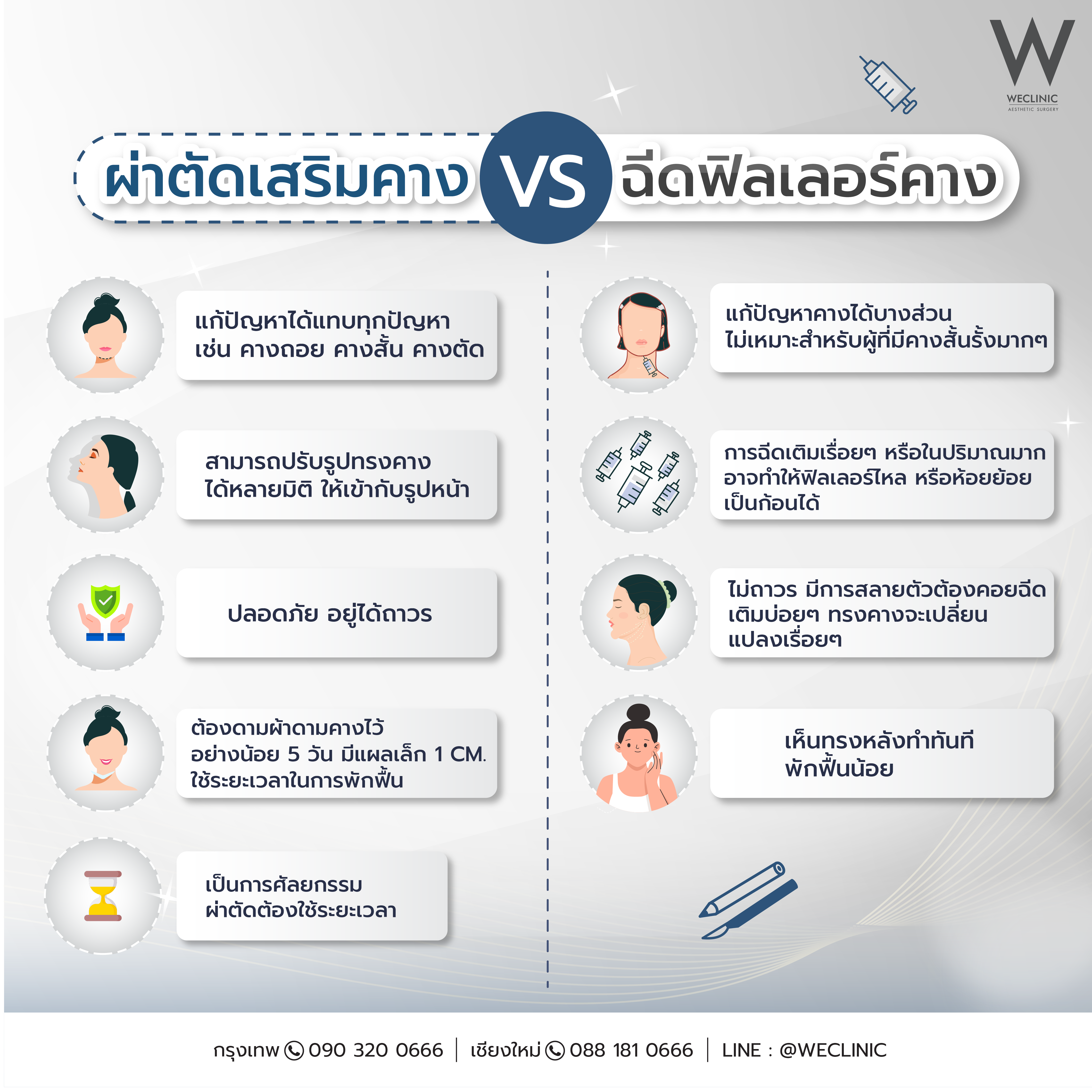
Further reading: 4 Common Questions to Ask Before Silicone Chin Augmentation—A Must-Read Before Making Your Decision
Why Choose Dr. Sam at WE Clinic for Silicone Chin Augmentation?
- Signature extended silicone implant technique
Dr. Sam uses a specialized extended long silicone chin implant designed to follow the natural curve of the chin bone. This helps create a refined, seamless contour and reduces concerns such as visible edges, implant “step-off,” or an unnatural look.
- Customized implant carving for each face
Every implant is individually shaped to match the patient’s facial structure and aesthetic goals supporting a balanced profile and a natural, harmonious result.
- Small external incision with discreet scar placement
The procedure is performed using a small external incision (approximately 1 cm) hidden beneath the chin. This approach can make postoperative care straightforward and may help reduce certain contamination risks compared to intraoral incisions.
- Natural-looking, well-blended results
With careful planning and technique, the goal is a chin shape that looks soft, refined, and proportionate enhancing definition without appearing overly sharp or done.
- Detailed facial assessment and profile design
Dr. Sam evaluates facial proportions and chin anatomy to address concerns such as a short chin, retruded chin, or a flat chin contour, helping improve overall facial balance and definition.

Conclusion
Dissolving chin filler is a safe and effective corrective option when the injected product is a genuine hyaluronic acid (HA) filler. In many cases, the filler can be largely dissolved within approximately one week, helping restore a smoother, more natural chin contour.
However, non-HA or illegal fillers cannot be dissolved with hyaluronidase and may require surgical removal or curettage instead. For this reason, choosing authentic, high-quality fillers and undergoing treatment with an experienced medical professional are essential to reduce risk and achieve satisfactory outcomes.


สำหรับผู้อ่านทุกท่านที่มีข้อสงสัยเพิ่มเติม ทีมแพทย์ We Clinic ยินดีให้คำปรึกษาฟรี
โดยไม่มีค่าใช้จ่าย หรือสามารถปรึกษาหมอทาง facebook หรือ Line ได้ที่นี่เลยครับ