

Drooping eyelids are more than just a cosmetic concern they can significantly impact your confidence and daily life. This condition can occur at any age and varies in severity, affecting either one or both eyes. While drooping eyelids typically cause no pain, leaving them untreated may gradually interfere with your visual field and overall quality of life.
At WE Clinic, we invite you to explore the underlying causes of drooping eyelids and understand how early evaluation can help restore both function and appearance.
What Are Drooping Eyelids?
Drooping eyelids (Ptosis or Drooping Eyelids) refer to a condition where the upper eyelid sags lower than normal, potentially affecting both appearance and vision. The severity can range from mild sagging to cases where the eyelid covers the pupil or obscures the iris, resulting in impaired sight.
This condition can be caused by several factors, including congenital ptosis, age-related tissue laxity, excess fat accumulation around the eyelids, or weakness of the levator muscle responsible for lifting the eyelid.

In some cases, individuals with drooping eyelids may need to tilt their head backward or constantly raise their eyebrows to improve their field of vision—behaviors that can unintentionally affect facial expression and overall appearance.
If left untreated, drooping eyelids may lead to long-term visual problems. Consulting a specialist is essential for accurate diagnosis and appropriate treatment tailored to the underlying cause.
What Do Drooping Eyelids Look Like?
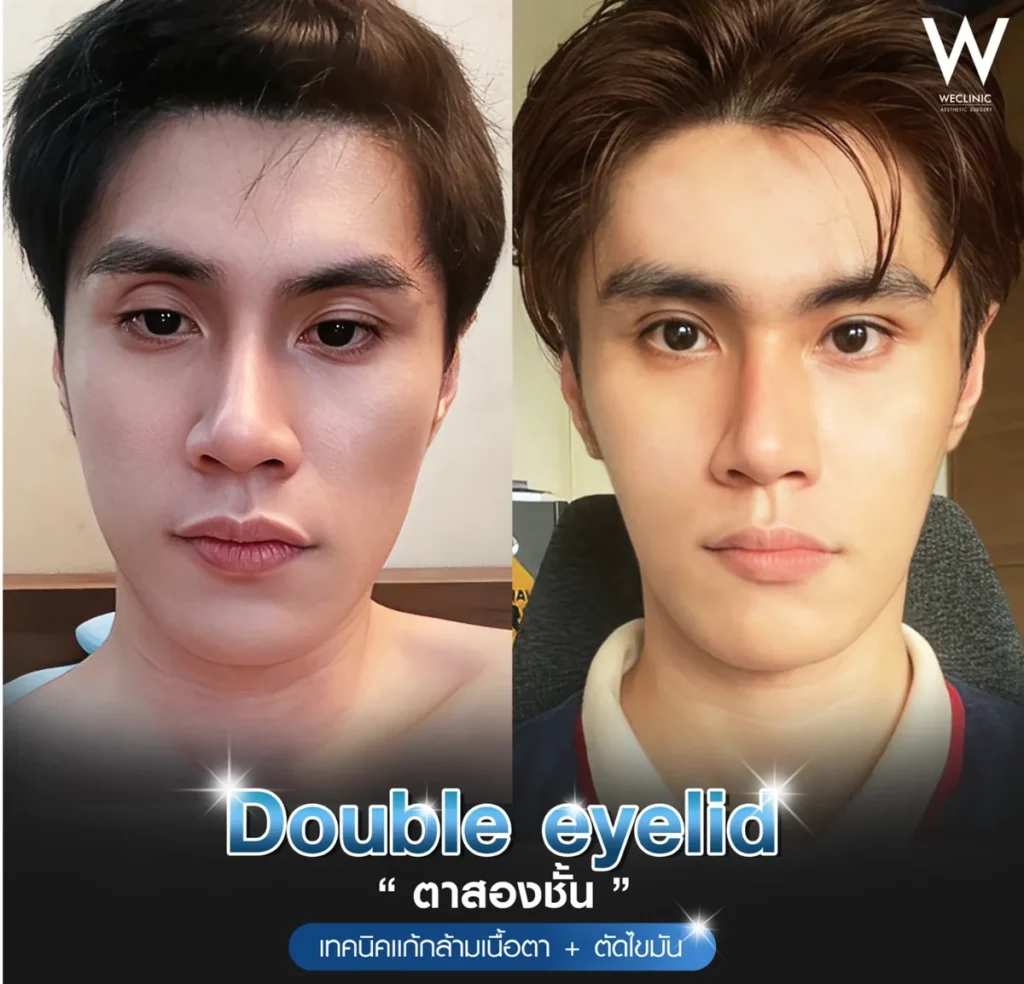
*Shown as an example of treatment results for an individual patient. Results may vary from person to person.
- Incomplete eye opening The upper eyelid sags downward, making it difficult to fully open the eyes. This can affect one or both sides.
- Partially covered iris or pupil Excessive drooping may cause the eyelid to cover part of the iris or pupil, reducing the visual field.
- Tired or sleepy eye appearance Drooping eyelids often create a consistently drowsy or fatigued look, making the eyes appear less bright and alert.
- Abnormal or impaired vision Some patients experience blurred vision, double vision, or difficulty focusing because the eyelid obstructs the line of sight.
- Eye strain and related symptoms Drooping eyelids may lead to eye fatigue, dryness, or increase the risk of amblyopia (lazy eye), particularly in children.
- Noticeable asymmetry One eyelid may sit lower than the other, creating visible unevenness—one of the most common signs of drooping eyelids.

Drooping eyelids affect more than appearance; they can influence confidence and interfere with daily activities. If these signs are present, consulting a specialist is essential for proper evaluation and treatment.
Causes of Drooping Eyelids
Drooping eyelids can occur in individuals of any age and result from various underlying factors. The most common causes include:

1. Congenital Drooping Eyelids (Congenital Ptosis)
Congenital drooping eyelids occur when the muscle responsible for lifting the eyelid develops abnormally from birth. Children with this condition may be unable to fully open their eyes or may have noticeably asymmetrical eye appearance.
Because the drooping eyelid partially covers the visual axis, it can interfere with normal visual development. If untreated, it may lead to amblyopia (lazy eye), which significantly affects long-term vision and becomes more difficult to correct in adulthood. Early diagnosis and treatment are therefore crucial to protect a child’s visual development.
2. Age-Related Drooping Eyelids
Age-related ptosis is caused by gradual weakening, stretching, or detachment of the eyelid-lifting muscle due to long-term use. Fat accumulation or excess skin around the eyelids may also contribute to the sagging.
Although symptoms may begin subtly, drooping eyelids can progress to a point where they obstruct the visual field or indicate a deeper underlying issue. Seeking evaluation from a specialist as soon as the condition is noticed is essential for accurate diagnosis and timely treatment.

3. Drooping Eyelids from Muscle Weakness (Levator Muscle Weakness)
Weakness of the levator muscle—the main muscle responsible for lifting the eyelid—is a common cause of ptosis. This may stem from congenital underdevelopment, age-related degeneration, chronic eye rubbing, allergies, or other external factors.
When the muscle weakens, the eyelids cannot open fully, narrowing the field of vision and creating a tired or sleepy appearance. If drooping eyelids begin to affect daily activities—such as vision, eye strain, or self-confidence—consulting a specialist is recommended to restore eyelid function and eye appearance.
4. Drooping Eyelids from Injury or Trauma
Trauma-related ptosis occurs when the eyelid-lifting muscle or surrounding tissues are damaged due to accidents or direct impact. Muscle tears or detachment can prevent the eyelid from lifting normally.
Repeated aggressive rubbing of the eyes can also cause the levator muscle to loosen from its attachment, resulting in excessive sagging. This not only affects eyelid function but may also alter facial appearance and confidence.
5. Drooping Eyelids from Nerve Disorders
Nerve-related drooping eyelids occur when the nerve controlling eyelid elevation (often the oculomotor nerve) becomes impaired. A common cause is reduced blood supply to the nerve, leading to partial loss of nerve signaling and weakened eyelid movement.
This condition may accompany additional symptoms such as strabismus (misaligned eyes), double vision, or reduced visual clarity. Accurate diagnosis and proper treatment by a specialist are essential to prevent long-term complications and preserve eye function.
How Are Drooping Eyelids Treated?
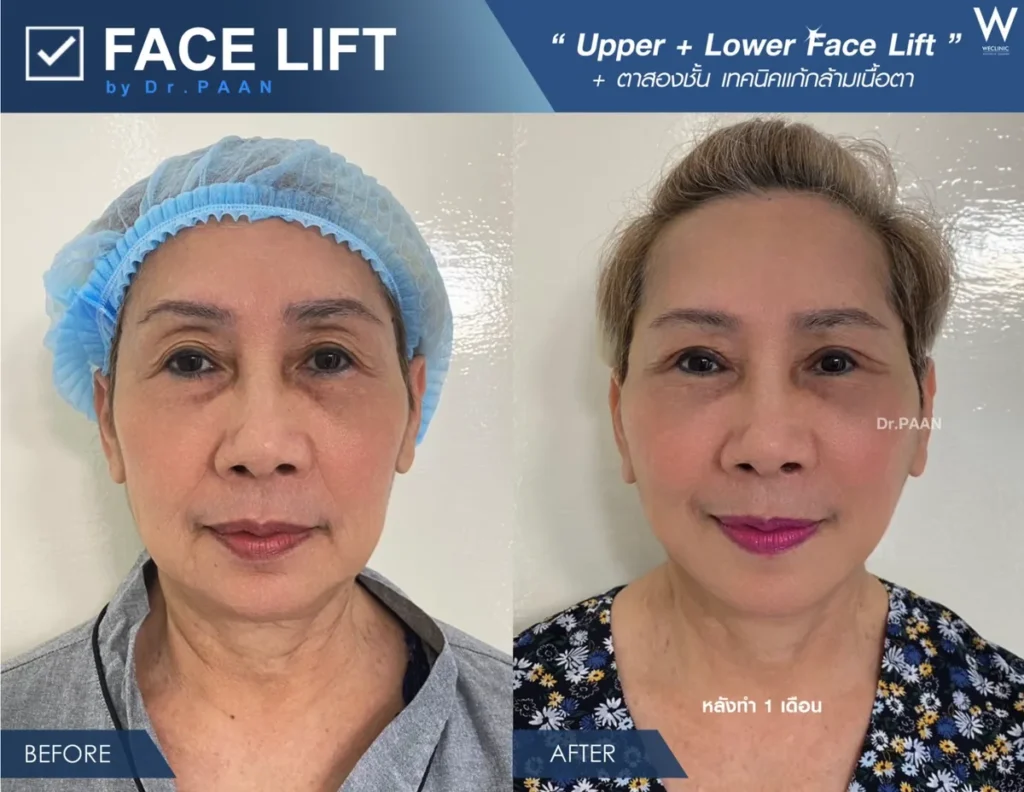
*Shown as an example of treatment results for an individual patient. Results may vary from person to person.
Treatment for drooping eyelids (ptosis) depends on several factors, including the underlying cause, severity of drooping, and impact on vision. A proper evaluation by a specialist is essential to determine the most appropriate approach.
At WE Clinic, treatment options for drooping eyelids are categorized into three main groups:
- Mild Ptosis
Mild drooping eyelids typically cover less than one-third of the upper cornea. At this stage, many patients may not experience significant functional impairment but may notice aesthetic concerns such as uneven eyelids, hidden eyelid creases, or eyes that appear smaller or older.
Treatment often involves upper eyelid surgery to remove excess skin and fat, usually performed alongside double eyelid surgery. This helps redefine the eyelid crease, open the eyes, and restore facial balance.
If mild ptosis begins to interfere with daily activities or visual clarity, early corrective surgery is recommended to prevent progression.
- Severe Ptosis
Severe drooping eyelids occur when the upper eyelid covers one-third to two-thirds or more of the cornea. This level of ptosis frequently causes significant visual obstruction and warrants timely surgical correction.
At WE Clinic, correction typically combines double eyelid surgery with a brow lift.
At WE Clinic, we perform a refined brow-lifting technique that hides the incision along the brow line. Elevating the brow helps counteract sagging tissue, brightening the eyes and creating a more open, refreshed appearance.
This approach effectively corrects heavy eyelids, lifts the outer corners of the eyes, and produces natural, harmonious results.
- Ptosis Caused by Levator Muscle Weakness
When drooping eyelids result from levator muscle weakness, the surgery must target the deeper muscular layer to restore proper eyelid height and function.
At WE Clinic, we use the LIDLOCK (Ptosis Surgery) technique, which reinforces the levator muscle and stabilizes the eyelid crease to prevent recurrent drooping. This procedure is often combined with double eyelid surgery to enhance eyelid shape, remove excess skin and fat, and create brighter, more defined eyes.
The result is improved visual function and correction of sleepy, droopy-looking eyes.
Where Is the Best Place to Treat Drooping Eyelids?
If you are struggling with drooping eyelids and looking for a trustworthy clinic to correct them, WE Clinic offers international-standard care backed by over 10 years of experience in drooping eyelid correction.
Using surgical techniques specifically designed to address drooping eyelids at their root cause, whether through levator muscle adjustment, double eyelid surgery, or brow lift, WE Clinic focuses on restoring both clear vision and natural-looking eye aesthetics.
If you want brighter, more youthful-looking eyes with results that still look like you, correcting drooping eyelids at WE Clinic is a highly reliable choice.
How Much Does Drooping Eyelid Surgery Cost?
At WE Clinic, the price for drooping eyelid correction surgery starts from approximately 49000+ THB, and may vary depending on each person’s original eyelid shape and specific eye concerns.
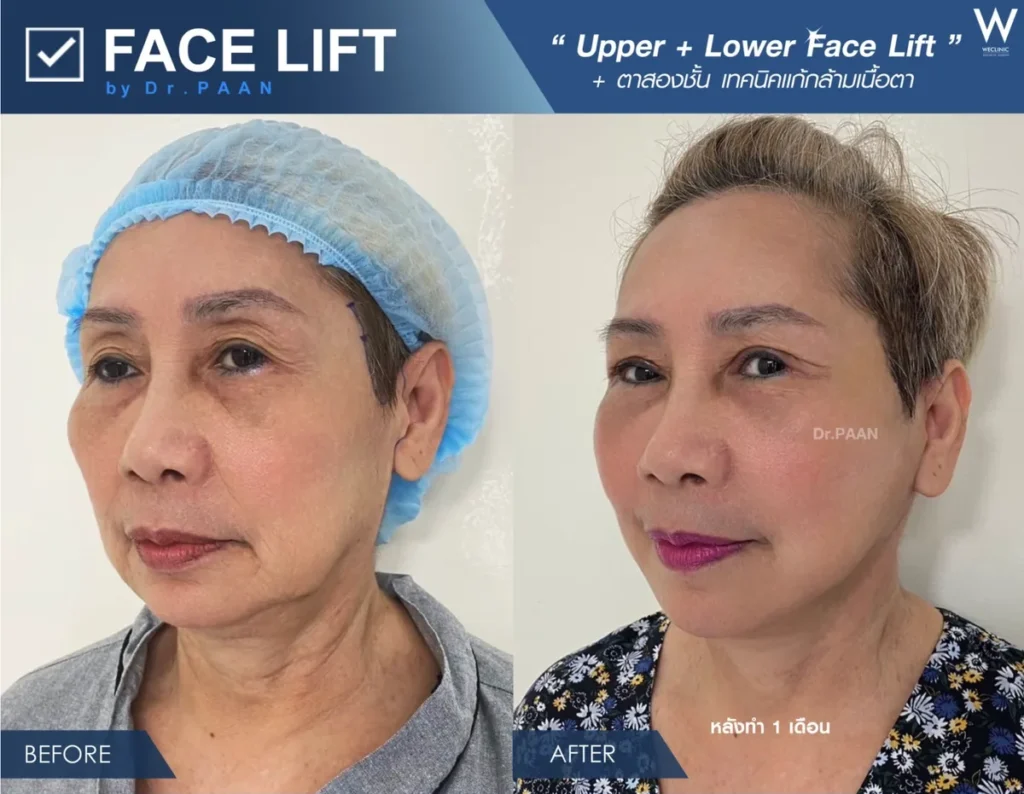
*Shown as an example of treatment results for an individual patient. Results may vary from person to person.
Because every patient has different aesthetic goals and anatomical features, some cases may require additional techniques such as combining ptosis correction with double eyelid surgery or other eyelid procedures to achieve the most satisfying and natural-looking result. These factors, along with the surgical method required, will influence the final cost.
You can first consult with our specialist by sending clear photos of your eyes for an initial assessment. The photos should meet the following basic criteria:
How to Take Photos for Drooping Eyelids Assessment
To allow the doctor to accurately evaluate your drooping eyelids, please follow these photo guidelines:
- Use adequate, natural lighting Take photos in a well-lit area, preferably using natural light. Avoid using flash, as it may create shadows or reflections that affect assessment.
- No makeup or filters Your face should be completely bare, no foundation, concealer, or beauty filters of any kind.
- No eye makeup or false eyelashes Remove all eye makeup, including eyeliner, mascara, and false eyelashes, to clearly reveal the natural eyelid contour.
- Remove contact lenses Take out your contact lenses so the doctor can accurately assess the position of the cornea and iris.
- Front-facing photo with eyes open Take a straight-on photo of your face with your eyes fully open, looking directly at the camera at a 90-degree angle.
- Front-facing photo with eyes closed Take another straight-on photo of your face with your eyes gently closed at the same 90-degree angle.
- Front-facing photo with raised eyebrows Take a front-facing photo while looking straight ahead, eyes open, and lifting both eyebrows. This helps the doctor evaluate the degree of drooping and any associated causes.
- Send the photos to the clinic Once all photos are taken, send them to our admin team through the clinic’s official contact channels for preliminary assessment.
Can Drooping Eyelids Go Away on Their Own?
Drooping eyelids do not improve on their own naturally.
In most cases, ptosis is caused by age-related skin laxity, excess fat around the eyelids, or dysfunction of the levator muscle that lifts the upper eyelid. These structural changes tend to be persistent and do not resolve without medical intervention.
Although drooping eyelids cannot recover spontaneously, there are several effective treatment options available today, such as double eyelid surgery, brow lift, and elevator muscle adjustment. These procedures are designed to lift the upper eyelid, widen the eye opening, restore a more refreshed appearance, and reduce the impact on vision.
If you notice progressive drooping of your eyelids or feel that it affects your confidence or visual function, it is advisable to consult a specialist to discuss suitable treatment options since drooping eyelids will not simply go away on their own.
How Long Do Swelling and Bruising Last After Drooping Eyelid Surgery?
Many people who are considering drooping eyelid surgery worry about how long swelling and bruising will last, and whether it will interfere with their daily life. In most cases, you can be reassured:
mild swelling and bruising are usually seen during the first week after surgery.
At WE Clinic, we use refined surgical techniques and all procedures are performed by experienced specialists. This helps minimize tissue trauma, reduce swelling and bruising, and shorten recovery time, so most patients can return to their normal routine with very little downtime.
How to Take Care of Yourself After Drooping Eyelid Surgery
Proper aftercare is essential following drooping eyelid correction surgery to ensure optimal wound healing and minimize the risk of complications. After surgery, follow these guidelines:
- Apply cold compresses during the first 3 days Use a cold compress around the eye area during the first 72 hours to reduce swelling and bruising and to promote faster healing of the surgical site.
- Switch to warm compresses from Day 6 onward Starting on Day 6, apply warm compresses around the eyes for about one week. This helps stimulate blood circulation and gradually reduce residual swelling.
- Keep the eyelid area clean Gently clean the eyelids with a cotton swab soaked in sterile saline at least 1–2 times per day to prevent infection and maintain cleanliness around the incision.
- Avoid getting the eye area wet Keep the surgical area dry for at least 10 days. Avoid washing the eye area or allowing water to come into contact with the incision to reduce the risk of infection and ensure proper wound healing.
- Sleep with your head elevated For the first 7 days, sleep with your head elevated on a higher pillow to help reduce swelling around the eyelids.
- Avoid strenuous activities Refrain from heavy exercise, running, or activities that cause excessive sweating to avoid contaminating the surgical area with sweat or dirt.
- Follow your doctor’s postoperative instructions closely Take your prescribed medications, use eye drops, and apply ointment exactly as instructed to prevent infection and support efficient wound healing.
Following these recommendations will help your eyelids heal smoothly, safely, and quickly restore a brighter and more refreshed appearance over time.
Conclusion
Drooping eyelids are not a condition that should be ignored, as they can affect both vision and self-confidence in daily life.
Treatment should always be performed by an experienced specialist who can tailor the approach to each individual whether through levator muscle adjustment, double eyelid surgery, or brow lift.
When properly planned and precisely executed, drooping eyelid correction can help restore brighter, more youthful-looking eyes, enhance overall facial harmony and confidence, and effectively reduce the risk of long-term visual complications.


สำหรับผู้อ่านทุกท่านที่มีข้อสงสัยเพิ่มเติม ทีมแพทย์ We Clinic ยินดีให้คำปรึกษาฟรี
โดยไม่มีค่าใช้จ่าย หรือสามารถปรึกษาหมอทาง facebook หรือ Line ได้ที่นี่เลยครับ