


Drooping eyebrows and sagging outer eye corners can make the face appear tired, sad, and older than it actually is. A brow lift is one of the most popular surgical options designed to address these concerns by gently lifting the eyebrows and rejuvenating the upper face. This procedure helps restore a fresher, more youthful, and vibrant appearance while maintaining natural facial expressions.
In this article, WE Clinic introduces safe and refined brow lift and facial lifting techniques performed with careful surgical planning and medical expertise. For those considering a brow lift to enhance facial balance and refresh their overall look, this is an option worth exploring.
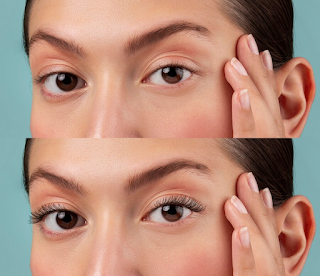
What Is a Drooping Eyebrow?
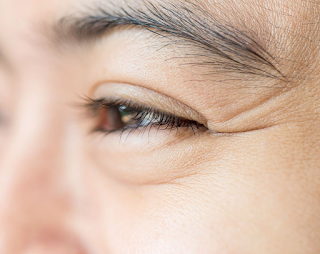
A drooping eyebrow medically referred to as eyebrow ptosis describes a condition where the tail of the eyebrow sits noticeably lower than the inner brow. It often appears together with sagging around the outer eye area, which can make the face look tired, sad, or older than it feels.
This concern is more common with age, as the muscles and soft tissues that support the eyebrow gradually lose firmness and begin to descend. However, drooping eyebrows can also occur in younger individuals, depending on factors such as facial structure and natural brow anatomy.
Causes of Drooping Eyebrows That May Lead to a Brow Lift
While drooping eyebrows are most commonly related to aging, other factors can also contribute even in younger individuals:
- Aging: As we get older, the skin and muscles around the eyes gradually lose firmness. This can cause the brows to sit lower and may be accompanied by fine lines and wrinkles.
- Facial structure: Some people naturally have a lower brow position from birth due to their facial bone structure such as a more prominent brow ridge that slopes downward, making the brows appear droopy.
- Facial expressions: Frequently raising the eyebrows or repeating certain expressions over time may overwork and fatigue the muscles around the eyes, which can contribute to brow descent.
- Injury: Trauma around the eyes or face may damage the muscles or nerves in the area, potentially leading to drooping eyebrows.
- Rapid weight loss: Sudden weight loss can reduce fat support around the eye socket and outer brow area, which may cause the tissues to sag and the brows to appear lower.
Brow Lift Surgery
At WE Clinic, brow lift surgery is performed as part of an upper facial lifting procedure designed to elevate the eyebrows and restore a more refreshed appearance. Key aspects of the technique include:
- Upper facial lifting approach: The procedure focuses on lifting the upper face to reposition the eyebrows, helping them appear naturally higher and more balanced.
- SMAS-based surgical technique: The surgery is performed at the SMAS layer (Superficial Muscular Aponeurotic System), which lies beneath the superficial facial muscles. This advanced technique requires a high level of surgical skill and experience.
- Improved skin tension and incision healing: Lifting at the SMAS layer helps reduce tension on the skin surface, allowing for better wound healing, discreetly hidden scars, and a lower risk of keloid formation.
- Natural-looking and long-lasting results: By addressing deeper facial structures, the results appear natural and can last for several years.
- Additional facial rejuvenation benefits: In addition to lifting the eyebrows, this procedure also helps elevate the outer eye corners, improve facial firmness, reduce wrinkles, and create a more youthful overall facial appearance.
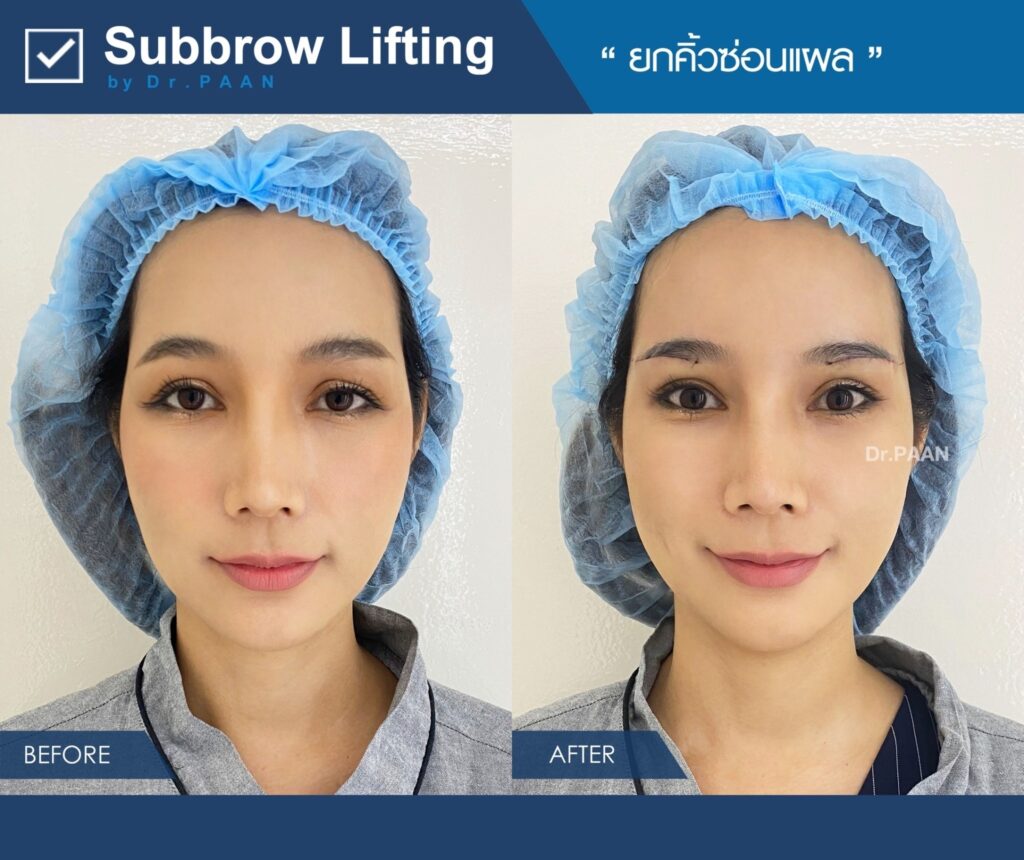
Steps of Brow Lift Surgery: Upper Temple Lift for the Outer Brow and Outer Eye Corner
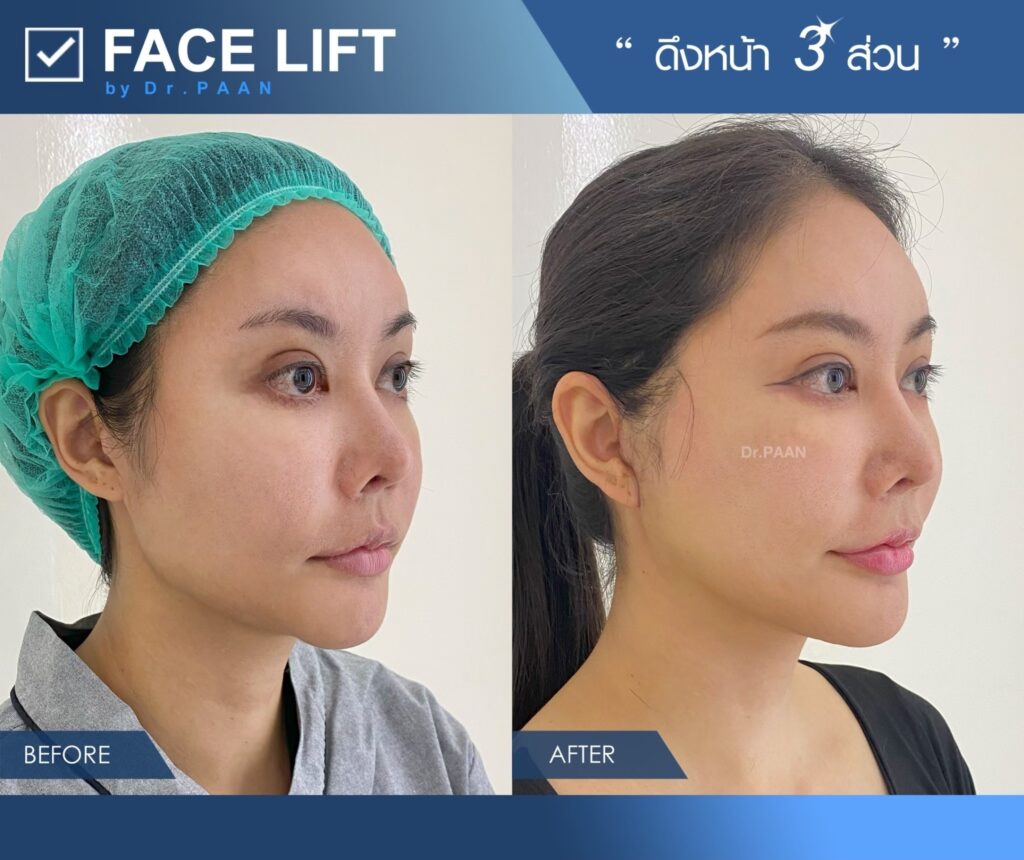
At WE Clinic, facial lifting procedures can be performed using various techniques for the upper, mid, or lower face. However, when the primary goal is to elevate the eyebrows and improve eyebrow ptosis, an upper face lift often performed as a temporal brow lift (lateral brow lift) is typically the most suitable approach.
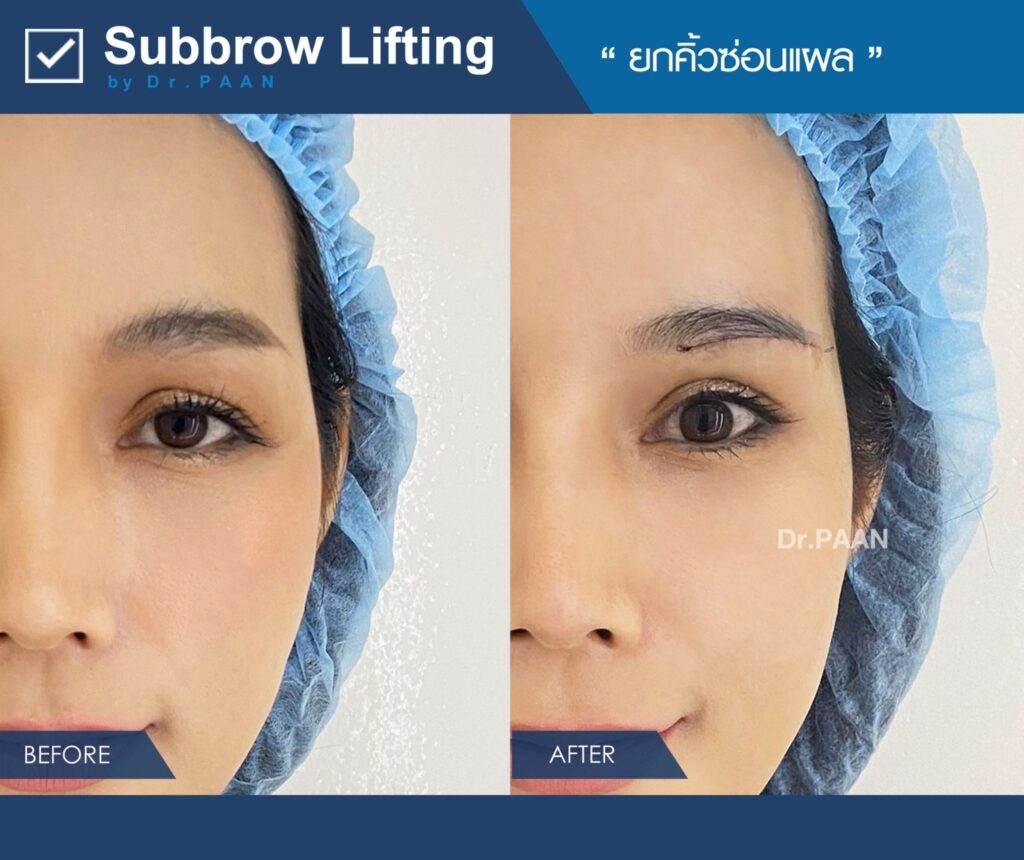
This brow lift surgery helps elevate the outer eye corner, the tail of the eyebrow, and the temple area. The surgeon makes incisions along the hairline above both temples, usually about 3–4 cm in length. Through these incisions, the tissues are carefully dissected, excess skin is removed, and the outer brow and outer eye area are lifted upward. Additional sutures are then placed to further tighten and support the underlying muscles.
This technique can improve temple wrinkles, crow’s feet, and drooping brows, while also refining the eyebrow shape into a more natural-looking arch. As a result, the outer eye area may appear sharper, and the upper face can look firmer, more lifted, and naturally more youthful.
Is Brow Lift Surgery the Same as Double Eyelid Surgery?
Brow lift surgery and double eyelid surgery are two different surgical procedures with distinct goals. Double eyelid surgery is performed to create or enhance an upper eyelid crease, transforming a single eyelid into a double eyelid. This procedure does not directly elevate the position of the eyebrows.
In contrast, brow lift surgery or upper facial lifting is specifically designed to lift and reposition the eyebrows, making it a more suitable option for correcting drooping brows.
However, in some cases, both procedures can be performed together. For patients who have undergone double eyelid surgery but still experience eyebrow ptosis, combining double eyelid surgery with a brow lift may help achieve a more balanced and refreshed upper facial appearance.
Can a Thread Lift Correct Drooping Eyebrows ?
A brow thread lift is a popular non-surgical technique that can help improve mild drooping eyebrows by lifting the brows in a natural-looking way. It may be an effective option when a medical evaluation confirms that surgery is not necessary.
One key advantage is how quickly results can be seen. After the thread lift procedure, many patients notice immediately that the brows appear higher, creating a brighter and more refreshed overall look.
However, thread lifting is not permanent and typically requires ongoing maintenance. In older patients, this approach may also contribute to reduced skin elasticity over time, as the skin naturally becomes less resilient with age.
Who Is a Good Candidate for Brow Lift Surgery?
Brow lift surgery may be suitable for individuals who:
- Have drooping outer eye corners and feel their face looks sad, tired, less refreshed, or affects overall facial impression
- Feel less confident due to noticeably low eyebrows, especially when the brow position has dropped more than normal
- Have drooping brows and eyelid sagging that may obstruct vision or make eyesight feel less clear
- Feel their face looks older than their age due to drooping brows and visible wrinkles
- Want to refine their look for a sharper, more lifted appearance while maintaining natural facial balance
Preparation Before and After Brow Lift Surgery
Preparation Before Brow Lift Surgery
Before undergoing brow lift surgery, patients are advised to prepare as follows:
- Consult with a surgeon: Attend a preoperative consultation for facial assessment and treatment planning together with the surgeon.
- Disclose medical history: Inform the surgeon of any underlying medical conditions and drug allergies. This is especially important for patients with bleeding disorders or abnormal clotting, as these conditions may increase surgical risk.
- Manage chronic conditions: Patients with conditions such as high blood pressure, diabetes, or thyroid disorders should consult with the surgeon in advance and ensure their conditions are well controlled before surgery.
- Avoid blood-thinning medications: Stop medications or supplements that affect blood clotting prior to surgery. If continuous use is necessary, consult the surgeon in all cases before the procedure.
- Prepare the face and scalp: Clean the face thoroughly, avoid heavy makeup, and wash the hair and scalp before coming in for surgery.
Post-Operative Care After Brow Lift Surgery
- Rest well for the first 48–72 hours: This gives the wound time to recover. After an upper face lift/brow lift, soreness, swelling, bruising, or minor bleeding may occur.
- Apply cold compresses around the incision area: This helps reduce swelling and bruising and may help control bleeding. Avoid getting the incision wet for at least 3 days.
- Do not touch the incision during the first 7 days: Touching increases the risk of infection.
- Clean gently with sterile saline: Use a cotton swab moistened with clean saline to wipe only around the incision where there is dried blood. Do not wipe directly on the incision.
- Sleep with your head elevated and keep your head straight: Use a higher pillow and try to sleep on your back to reduce swelling and prevent turning that may irritate the incision.
- Avoid heavy lifting and intense exercise for the first 2–3 days.
- Choose soft foods and avoid high-risk foods: Eat soft foods and avoid fermented foods or partially cooked/raw foods that may increase the risk of infection.
- Avoid alcohol and smoking for the first month: Alcohol and smoking can interfere with healing and may increase the risk of complications.
Frequently Asked Questions About Brow Lift Surgery
Is Drooping Eyebrows (Eyebrow Ptosis) Only Seen in Older People?
No. Drooping eyebrows (eyebrow ptosis) can affect people of all ages and genders; it is not limited to older adults. Although aging is one factor that may contribute to brow drooping, it is not the only cause.
Eyebrow ptosis can also result from facial bone structure, daily habits or repetitive facial movements, certain medical conditions, or previous injuries. Therefore, even younger individuals may experience drooping eyebrows as well.
Which Is Better Brow Lift Surgery or Non-Surgical Brow Lifting Treatments?
Choosing between brow lift surgery and non-surgical brow lifting treatments depends on several factors, including how severe the brow drooping is, your budget, and your personal goals.
For individuals who want a more long-lasting correction or those with more significant eyebrow ptosis, brow lift surgery is often the most effective option for elevating the eyebrows.
Summary
Brow lift surgery is a facial surgical procedure designed to correct drooping eyebrows, a concern that often becomes more noticeable with age. The procedure helps elevate the brows, reduce upper-face wrinkles, and restore a brighter, more youthful appearance with long-lasting results.
At WE Clinic, we offer an upper face lifting program to address eyebrow ptosis using a safe, carefully planned surgical approach. Each treatment is guided by experienced, board-qualified surgeons, with individualized assessment and a personalized surgical design tailored to each patient.
If you are considering brow lift surgery or other facial aesthetic procedures, you are welcome to request a free consultation via WE Clinic by Dr. Sam & Dr. Da on Facebook, LINE: @weclinic, or call 090-320-0666.


สำหรับผู้อ่านทุกท่านที่มีข้อสงสัยเพิ่มเติม ทีมแพทย์ We Clinic ยินดีให้คำปรึกษาฟรี
โดยไม่มีค่าใช้จ่าย หรือสามารถปรึกษาหมอทาง facebook หรือ Line ได้ที่นี่เลยครับ